
Retaining Wall Drainage: Why It Matters and How to Do It Right
Without drainage, a retaining wall is a dam. Water builds up behind the wall, saturates the soil, and creates hydrostatic pressure that pushes outward with more force than the wall was designed to resist. A retaining wall with no drainage looks fine the first season, but the soil behind it gets heavier with every rain. By the time you see the wall leaning, bowing, or cracking, the structural damage is already done. Cardona Construction designs and installs retaining wall drainage solutions across Alameda and Contra Costa counties, allowing water to move through and away from the wall instead of building up behind it.
What separates a wall that stands straight at year 15 from one that leans at year five usually isn't anything you can see from the front. It's what's built into the back of the wall: gravel backfill that lets water move freely, a perforated pipe at the footing to carry it off, and weep holes or relief drains that give it somewhere to exit. Get those right and the soil behind the wall stays dry. Discover how drainage fails, how the system works when it's built correctly, and the components that make the difference.
What Happens When a Retaining Wall Has No Drainage?
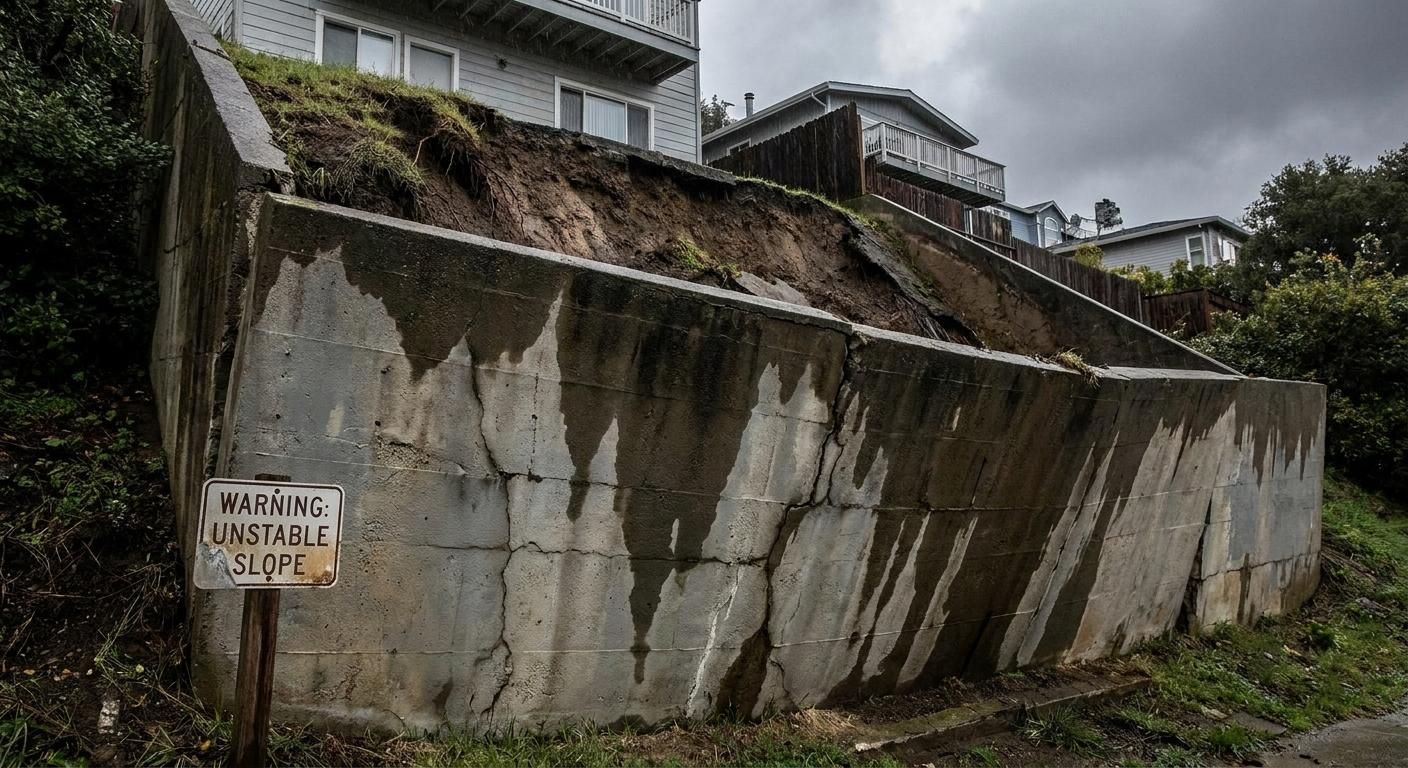
Retaining walls without drainage fail from the inside out. Rainwater saturates the soil behind the wall. Saturated soil weighs 20% to 30% more per cubic foot than dry soil, converting that weight into lateral pressure. A 4-foot wall can tilt 2 to 3 inches outward in one Bay Area rainy season. Failure accelerates once movement begins.
On Orinda's steep hillside lots, where a leaning wall can take a slope's worth of soil with it, a drainage failure can turn a $5,000 repair into a $30,000 wall replacement. Weep holes that were never installed or have clogged are the most common point of failure: small, easy to overlook, and the single most important opening in the wall.
How Retaining Wall Drainage Works
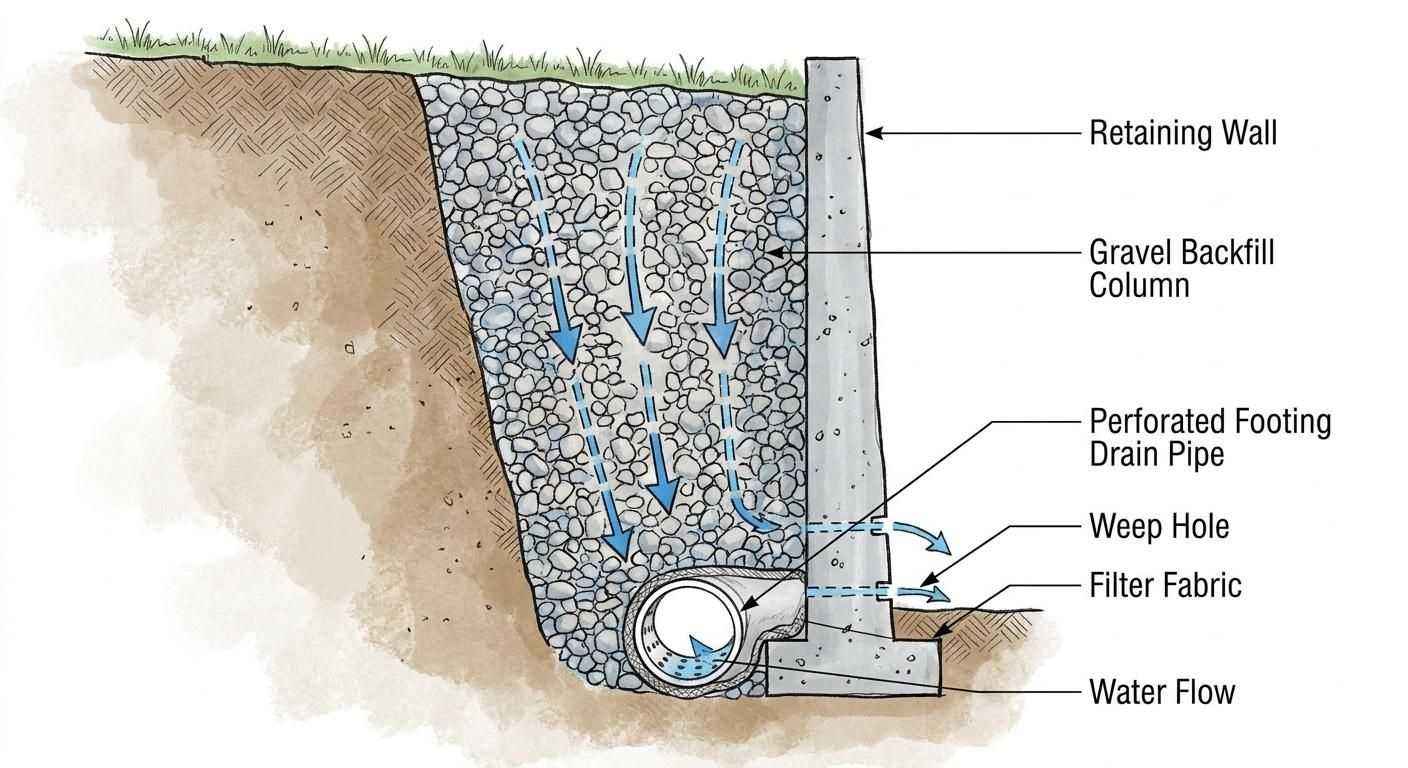
Retaining wall drainage has three components:
- Gravel drainage: located behind the wall, this layer creates a permeable zone for water to flow downward.
- Perforated footing drain: Collects water at the base before moving it to an outlet.
- Weep holes: installed every 4 to 6 feet to give remaining water a direct path out.
Together, water travels through gravel, enters the pipe, and flows to daylight. The gravel backfill does the heavy lifting. Without it, water moves laterally through clay against the wall. The pipe needs consistent slope and clear weep holes. Cardona Construction's trenching and drainage expertise ensures correct depth and slope for gravity-fed discharge.
Key Components That Keep a Wall Standing
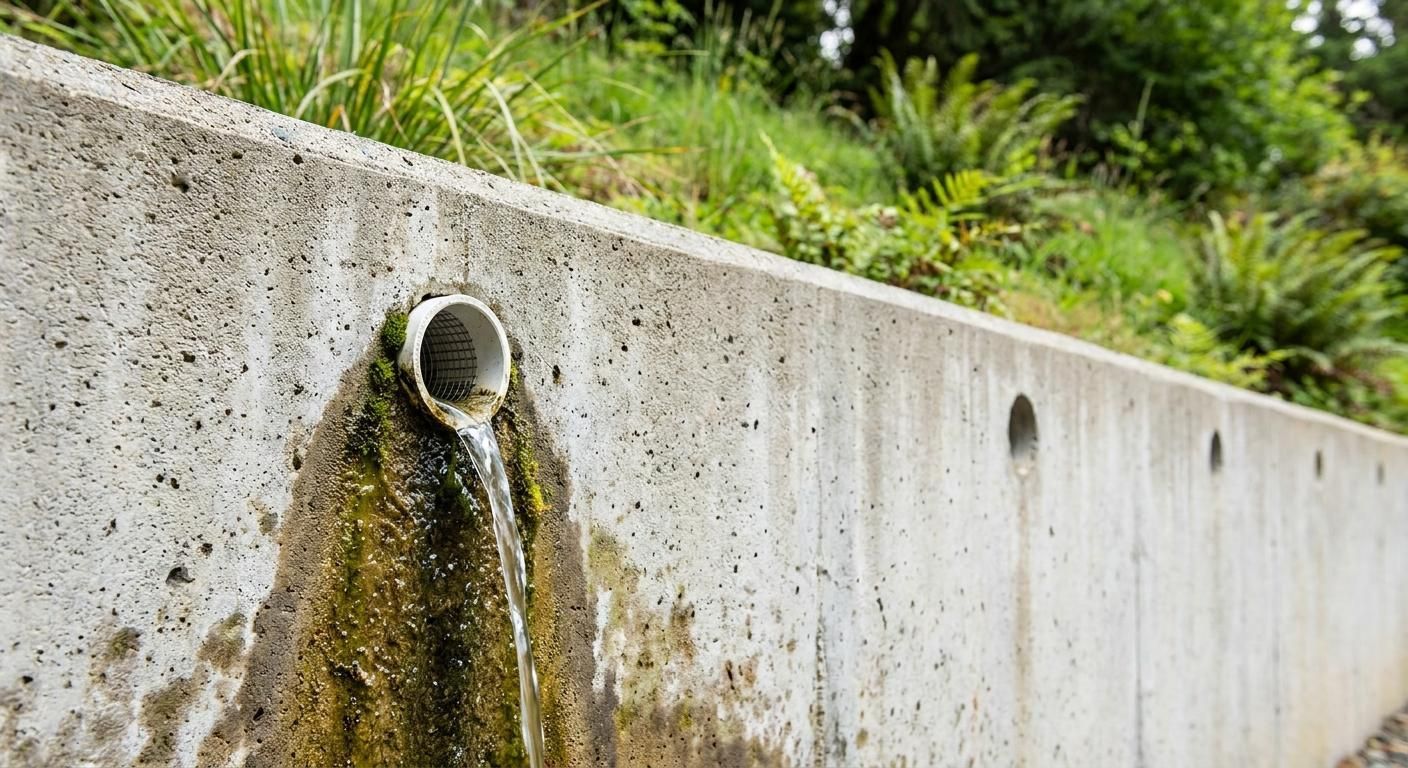
A functioning retaining wall drainage system has five components. Each plays a specific role in moving water away from the wall:
- Gravel backfill at least 12 inches wide. Clean angular gravel creates permanent void space for water to move through.
- Nonwoven geotextile filter fabric that separates the gravel from native soil. Without it, clay migrates in and clogs the path within a few rainy seasons.
- A footing drain of 4-inch rigid PVC with downward-facing perforations, set at the base below finished grade to carry water off.
- Weep holes , 2-inch PVC sleeves spaced every 4 to 6 feet, that let water exit through the face of the wall.
- A safe discharge outlet , since both the footing drain and the weep holes have to release water somewhere that won't undermine the wall or the slope.
For larger properties, a custom drainage solution that integrates the wall with broader site drainage provides the most comprehensive protection.
Frequently Asked Questions
Can I add drainage to an existing retaining wall that doesn't have it?
Drainage can be added to an existing retaining wall, but the method depends on the wall’s condition. For a wall still plumb, weep holes can be core-drilled through the face at the base, and a curtain drain installed behind the wall from above without disturbing the structure. If the wall is already leaning or bulging, drainage alone won't reverse the damage. The wall may need partial or full rebuilding with proper drainage installed during reconstruction.
How often should retaining wall drainage be maintained?
Retaining wall drainage should be checked annually in fall before the rainy season. Clear debris from weep holes, walk the wall looking for new cracks or bulges, and verify the discharge point flows freely during rain. If the wall has a footing drain cleanout port, flush it with a garden hose once a year. Any weep hole without discharge during rain is clogged. Clearing the drainage is the simplest maintenance task and the one most often overlooked.
Does Cardona Construction build retaining walls?
Cardona Construction specializes in drainage systems—including retaining wall drainage, footing drains, curtain drains, and French drains —but we do not build the retaining wall structure itself. For new wall construction, coordinate with a wall contractor to ensure drainage components are installed correctly during the build. For existing walls with drainage problems, we can assess the site, design the drainage solution, and install it.
Protect Your Retaining Wall Investment
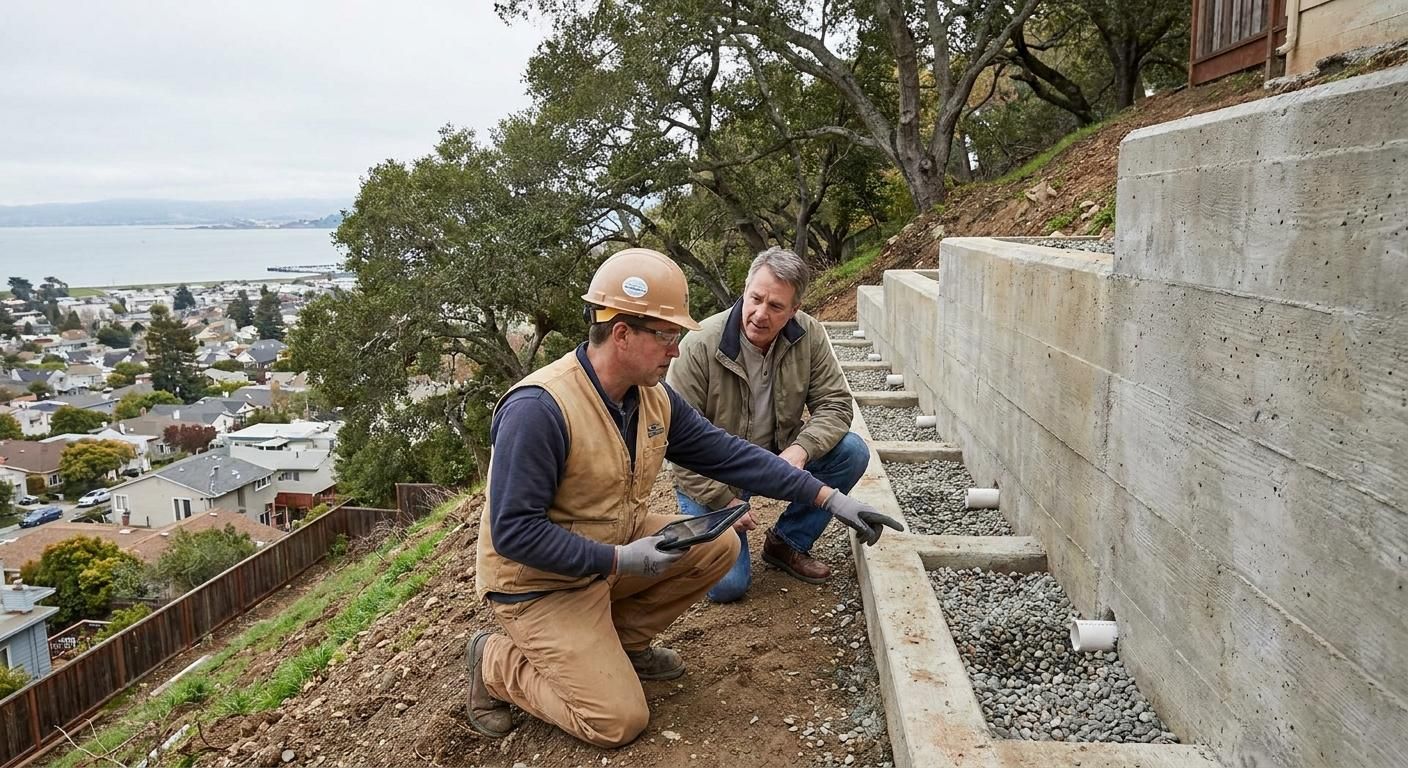
A retaining wall is a significant investment in your property, and its lifespan depends entirely on what's behind it. Proper drainage keeps the soil dry, the pressure low, and the wall standing straight decade after decade. If your retaining wall doesn't have visible weep holes, shows signs of leaning or cracking, or has soil that stays wet for days after rain, the drainage system needs attention before the wall does.
For retaining wall drainage evaluation, call (925) 642-6349 or schedule an on-site assessment online.