
Concrete vs Asphalt Driveway: Which Is Better for Your Home?
Concrete driveways cost $6 to $15 per square foot and last 30 to 40 years. Asphalt driveways cost $5 to $12 per square foot and last 15 to 30 years. The right choice depends on your climate, how long you want the driveway to last, and how much maintenance you're willing to do. Cardona Construction installs concrete driveways across the East Bay—not asphalt—and sees the cost difference between these two materials play out across Bay Area properties.
Homeowners comparing these two materials usually focus on the upfront price. That's the wrong starting point. The real cost difference shows up over 20 years of maintenance, repairs, and eventual replacement. Here's what matters at each stage.
Upfront Cost and Installation
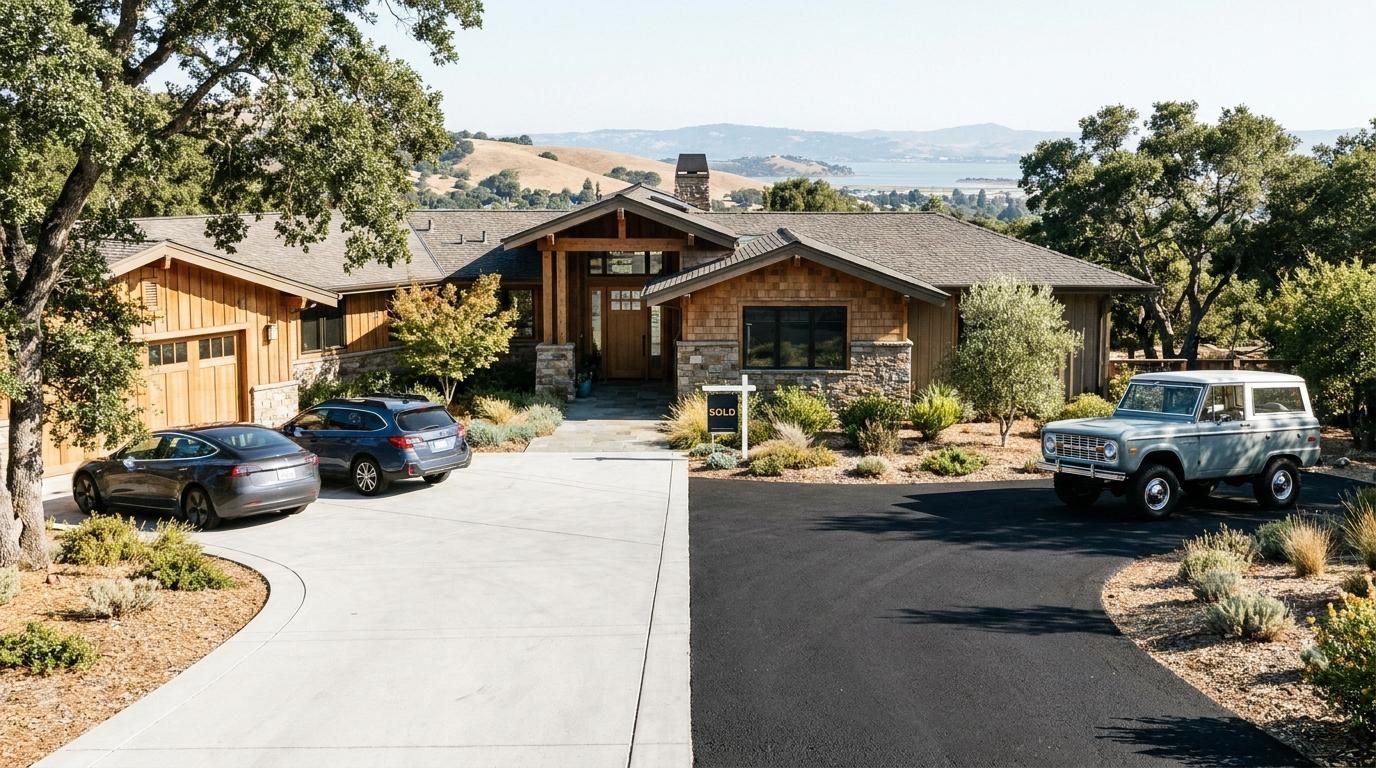
Asphalt wins on initial price. A standard two-car driveway runs $3,000 to $7,200 in asphalt versus $3,600 to $9,000 in concrete for the same area. That gap narrows in the Bay Area, where labor costs push both materials higher than national averages.
What Drives the Price Difference
Concrete requires more preparation. The subgrade needs compacting, forms need setting, and the pour itself takes longer to finish. Asphalt installation is faster because the material is laid hot and compacted with a roller in a single pass. But faster installation doesn't mean simpler engineering. Both materials fail without proper subgrade preparation, and in Bay Area clay soil, that preparation matters more than the surface material.
Hidden Installation Costs
The quote you receive should include subgrade work, not just the surface pour or pave. Ask specifically about soil preparation, compaction testing, and drainage integration. A driveway installed over poorly compacted Bay Area clay will crack within five years regardless of material. For a detailed breakdown of what goes into a concrete driveway quote, see Cardona Construction's guide on how much concrete driveways cost.
Lifespan, Durability, and Maintenance
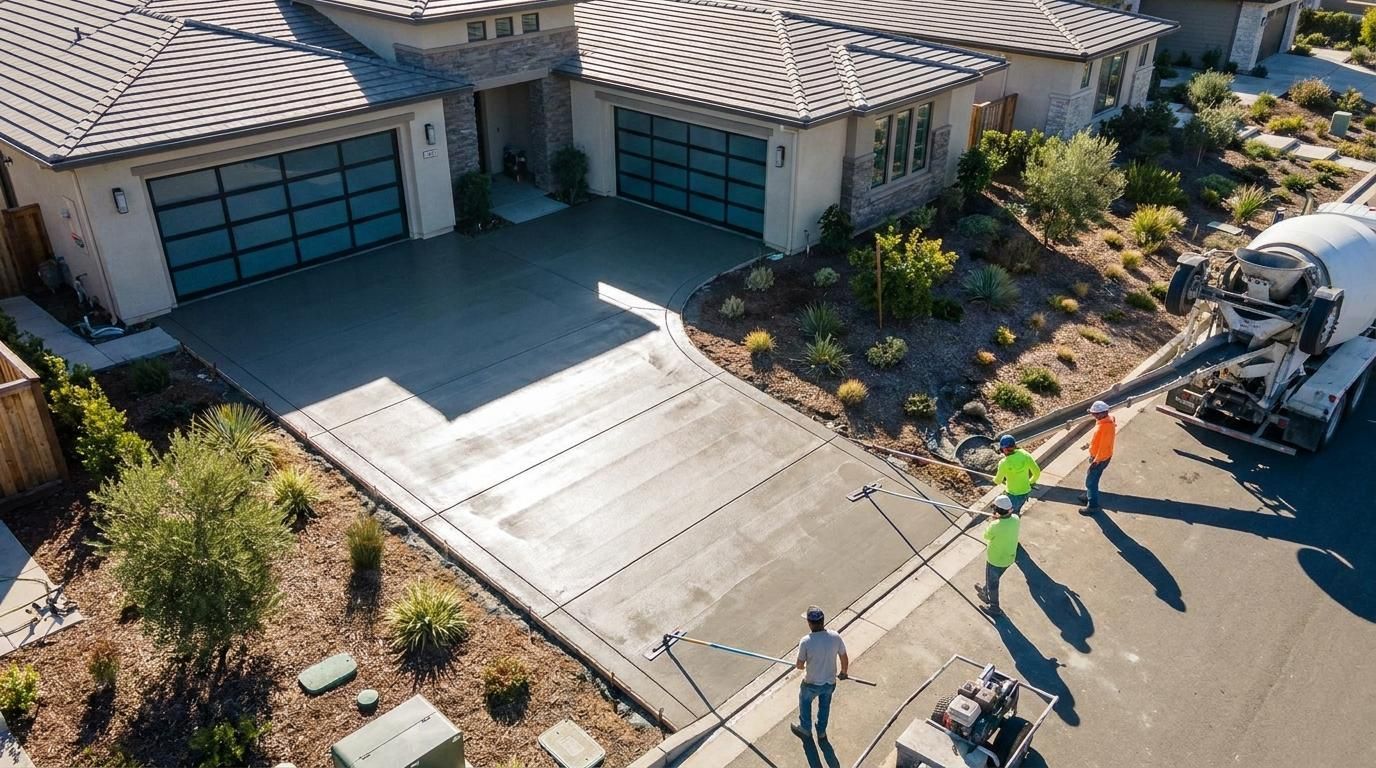
This is where the comparison shifts. Concrete's higher upfront cost buys significantly less maintenance and a longer service life.
Concrete: 30 to 40 Years With Minimal Upkeep
A properly installed concrete driveway needs sealing every three to five years and occasional crack repair. It resists UV damage, doesn't soften in heat, and handles heavy vehicles without rutting. The main vulnerability is freeze-thaw cycling, which is rarely an issue in the Bay Area's mild climate. That makes concrete an especially strong choice for East Bay homeowners.
Asphalt: 15 to 30 Years With Regular Maintenance
Asphalt requires seal coating every two to three years to prevent oxidation and water penetration. It softens in high heat, which can cause rutting under parked vehicles during Bay Area summer days that reach 90 degrees or higher in inland valleys. Without consistent maintenance, asphalt deteriorates faster than concrete and typically needs full replacement 10 to 15 years sooner.
20-Year Cost Comparison
Over 20 years, a concrete driveway costs roughly $4,500 to $10,500 including installation and maintenance. An asphalt driveway costs $5,500 to $12,700 over the same period when you factor in seal coating every two to three years and a likely resurfacing around year 15. The material that costs less upfront often costs more over the life of the driveway.
Climate Performance in the Bay Area
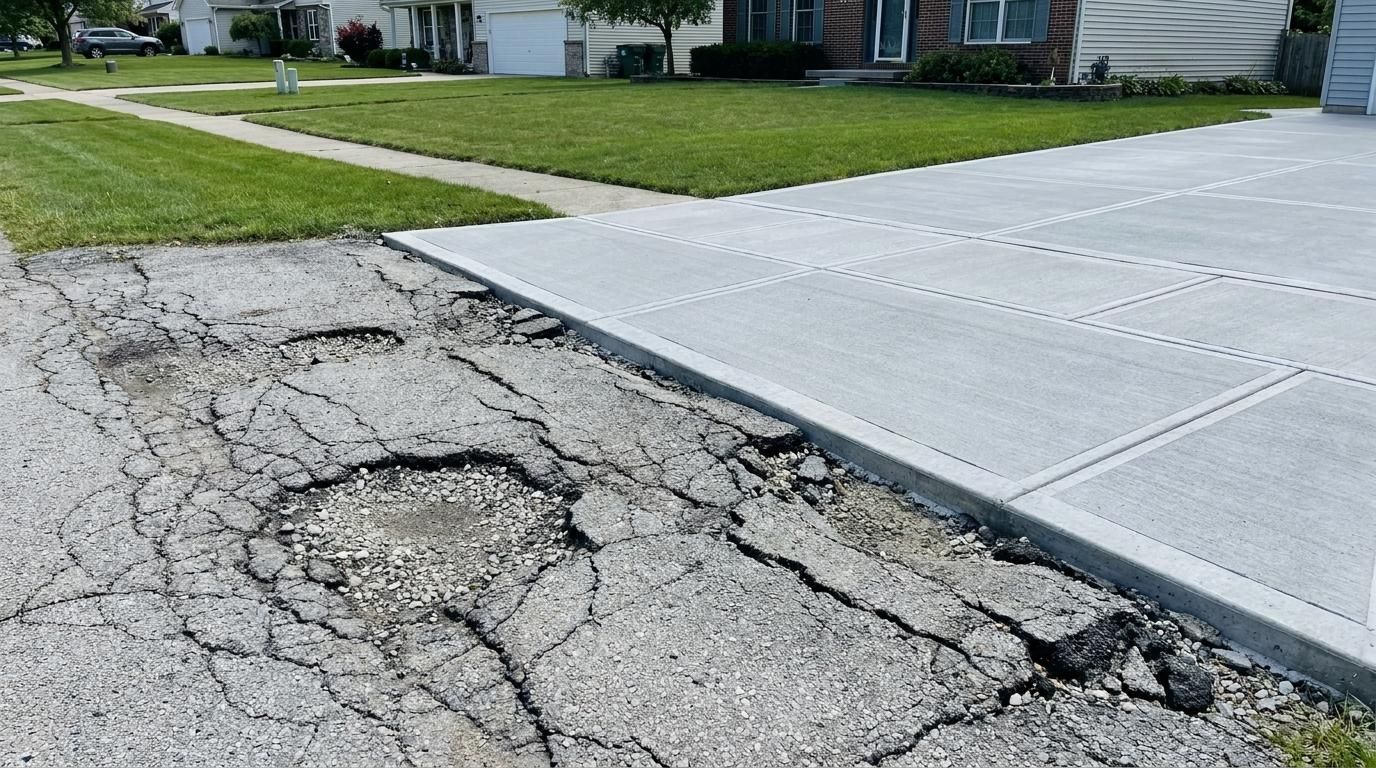
Bay Area weather creates specific challenges for both materials. Understanding how each performs under local conditions prevents choosing the wrong surface for your property.
Wet-Season Performance
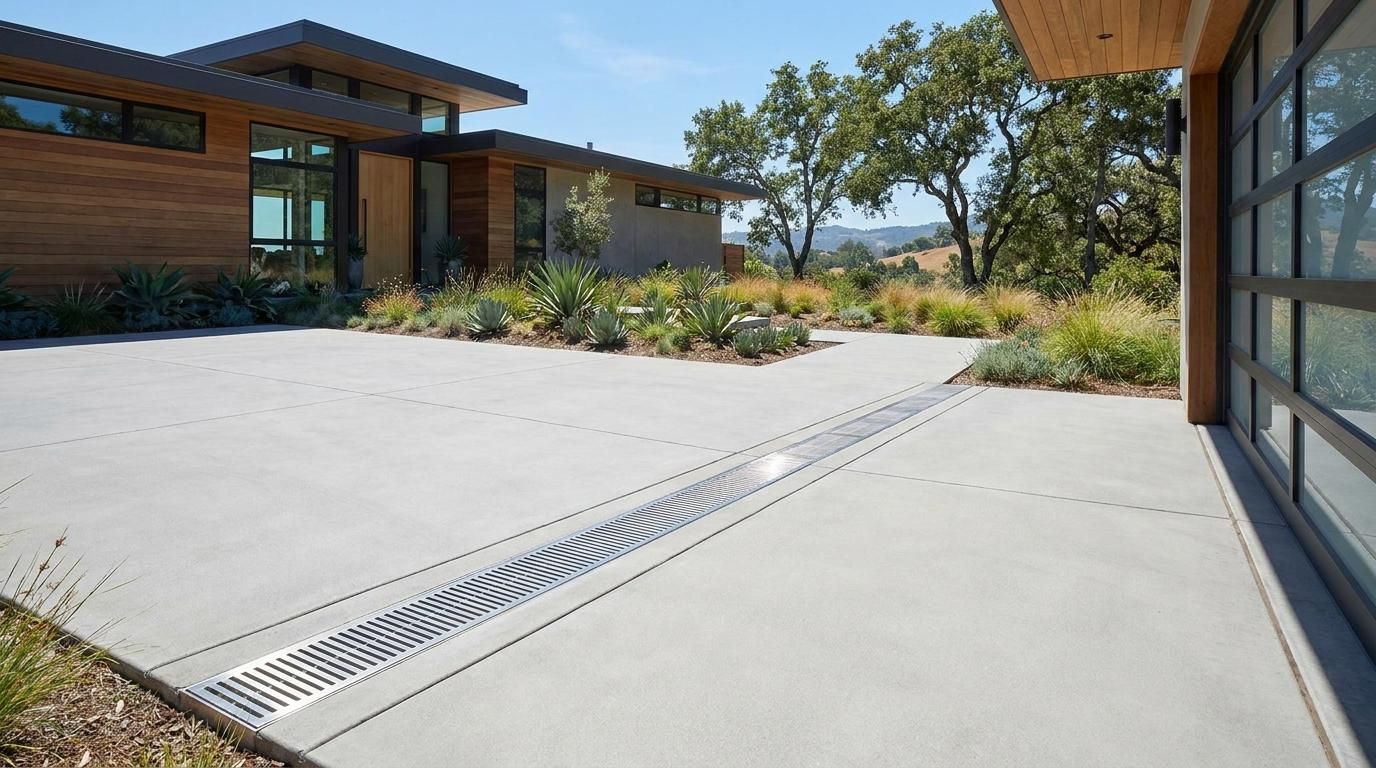
Concrete handles standing water better than asphalt. Water pools on asphalt surfaces and seeps through cracks into the subgrade, accelerating base erosion. Concrete's harder surface sheds water more effectively, especially when installed with proper slope and integrated drainage channels. During the Bay Area's November-through-April rainy season, this difference compounds every year.
Heat and UV Exposure
Asphalt absorbs more heat than concrete, reaching surface temperatures 20 to 30 degrees higher on sunny days. This accelerates binder oxidation and causes the surface to soften, leading to deformation under vehicle weight. Concrete reflects more sunlight and maintains its structural integrity across the full temperature range Bay Area homeowners experience.
Appearance and Design Options
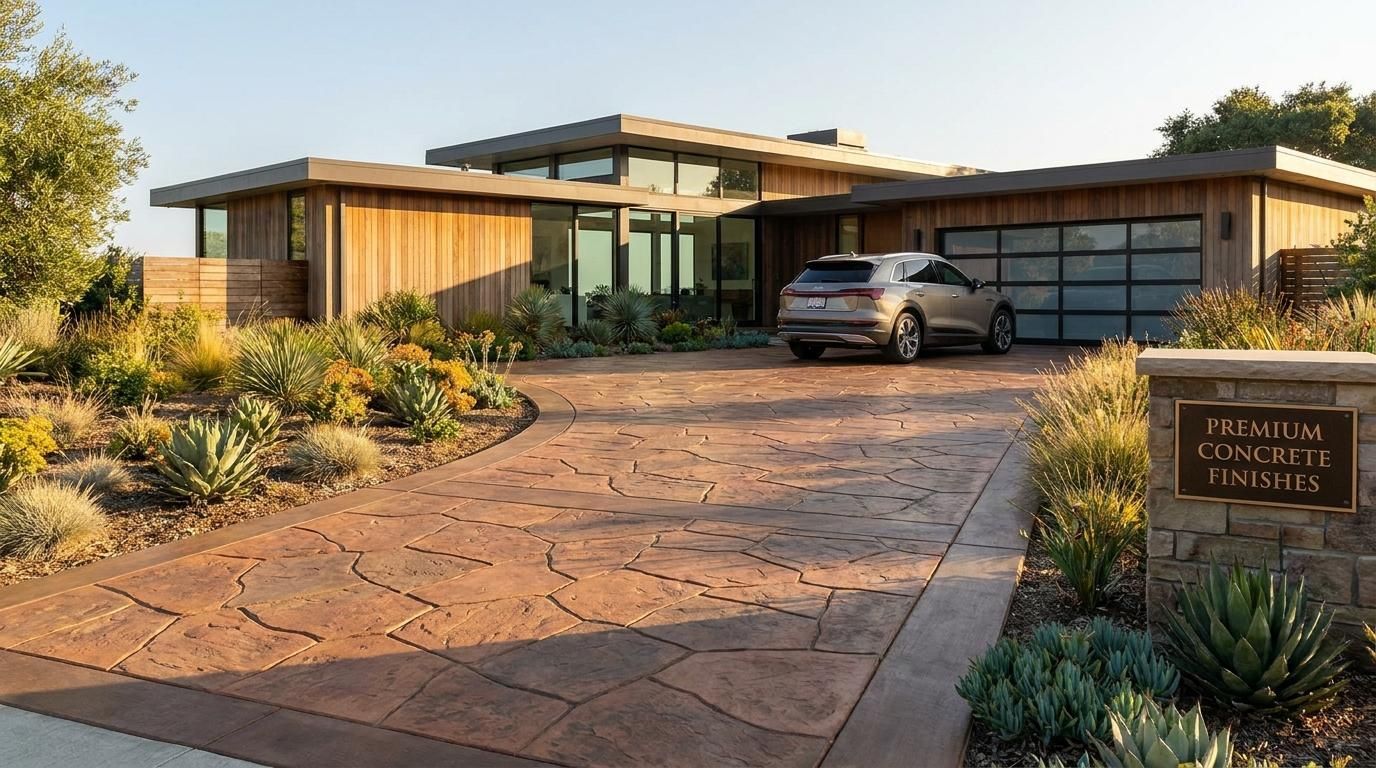
Concrete offers stamped patterns, exposed aggregate, integral color, and acid staining. These options let homeowners match the driveway to their home's architecture and landscaping. Asphalt is limited to a uniform black surface that fades to gray over time.
For Bay Area homes where curb appeal directly affects property value, concrete's design flexibility is a measurable advantage. A well-designed concrete driveway adds to the finished look of the property in a way that asphalt cannot replicate.
Frequently Asked Questions
Is concrete or asphalt better for California driveways?
Concrete is the stronger choice for California and particularly the Bay Area. The mild climate eliminates concrete's main weakness, which is freeze-thaw damage, while exposing asphalt's weaknesses to heat softening and UV degradation. Concrete also handles the wet-dry soil cycles better when installed with proper drainage.
How much more does a concrete driveway cost than asphalt?
Concrete costs roughly 20% to 30% more upfront. A standard two-car driveway runs $3,600 to $9,000 in concrete versus $3,000 to $7,200 in asphalt. Over 20 years, concrete typically costs less due to lower maintenance requirements and longer lifespan before replacement.
Can you pour concrete over an existing asphalt driveway?
Technically yes, but it's not recommended. The asphalt underneath continues to shift, crack, and deteriorate, which transfers those problems to the concrete overlay. Removing the asphalt and installing concrete on a properly prepared subgrade produces a driveway that lasts decades instead of years.
Pick the Driveway That Lasts
Asphalt costs less on day one. Concrete costs less over 20 years. In the Bay Area's mild, wet-dry climate, concrete outperforms asphalt on durability, maintenance, heat resistance, and design options. The only scenario where asphalt makes sense is if you have a short-term budget with plans to replace within 15 years.
Contact Cardona Construction at (925) 642-6349 or schedule your free driveway consultation to get a site-specific estimate for your East Bay property.