French Drain Maintenance: How to Keep Your System Running
French drain maintenance allows your drainage system to last over 20 years. The steps are simple: clearing surface grates, flushing the pipe with a garden hose, and checking that water still runs from the outlet. In the Bay Area's clay-rich ground, skipping even one season can let enough sediment into the pipe to start a blockage. The fine clay particles that make East Bay soil so slow to drain are the same ones that settle inside a neglected drain.
The good news is that staying ahead of it takes only a few checks a year, timed around the rainy season. June is the ideal starting point: the ground has dried out from winter, last season's drainage performance is still fresh in your mind, and there's plenty of runway before the first November storm. Wait until October and you're scrambling against the first major winter storm. Cardona Construction has been installing, maintaining, and inspecting French drains across Alameda and Contra Costa counties for over 40 combined years. The systems that last are always the ones checked before and after the wet season. Below, we discuss the three seasonal checks you need, one for fall, winter, and spring, so you can keep your Bay Area French drain running year after year.
Fall: Clear and Prep Before the Rains
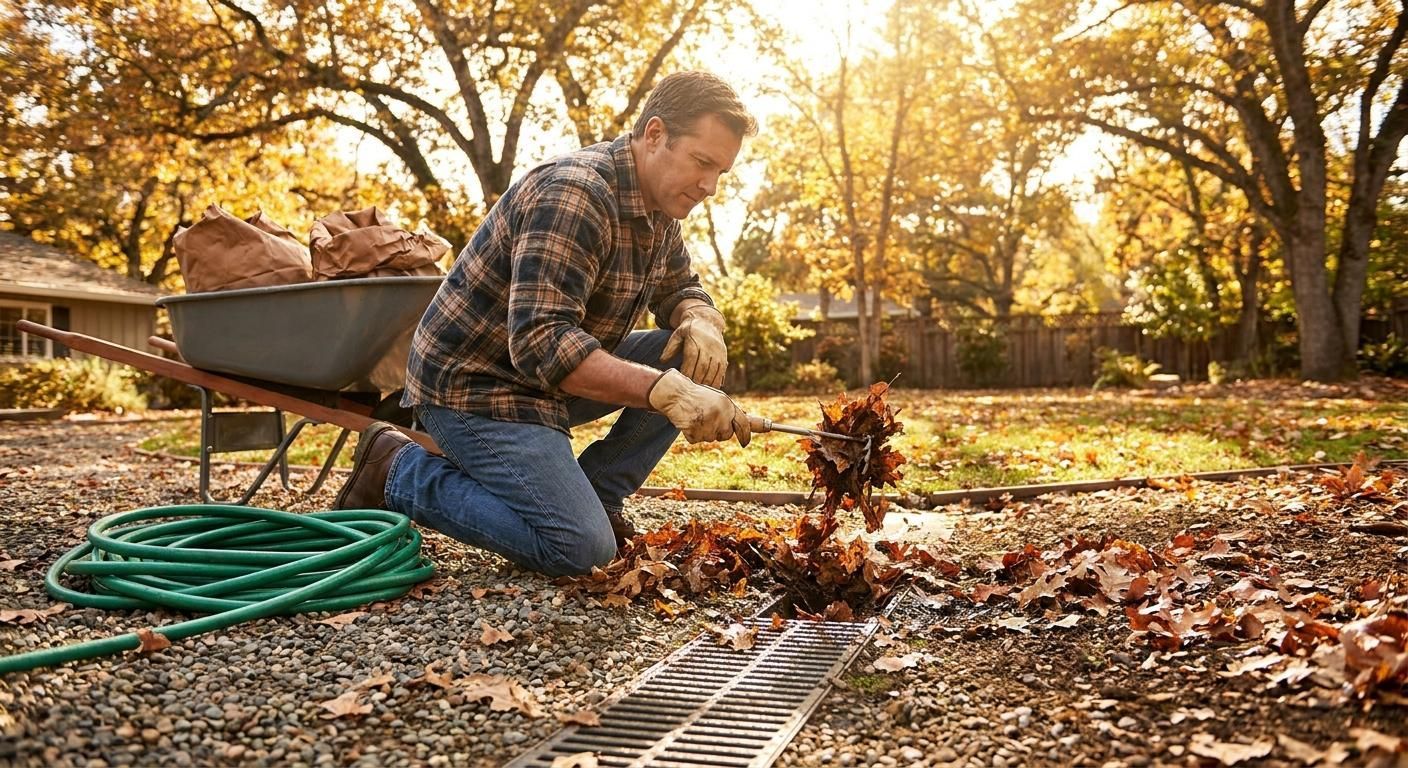
Think of fall maintenance as your system’s annual physical. A quick check-up now ensures your drain is ready to handle the heavy workload of the coming rainy season.
Test Flow Before the Rains Hit
September through October is the most important maintenance window of the year. The drain has sat dry all summer, and debris (leaves, soil, mulch) has had months to accumulate on grates, inlets, and outlet openings. Clear every grate and inlet. Walk the trench line looking for depressions that may indicate a collapsed section.
Winter: Monitor During Heavy Rain
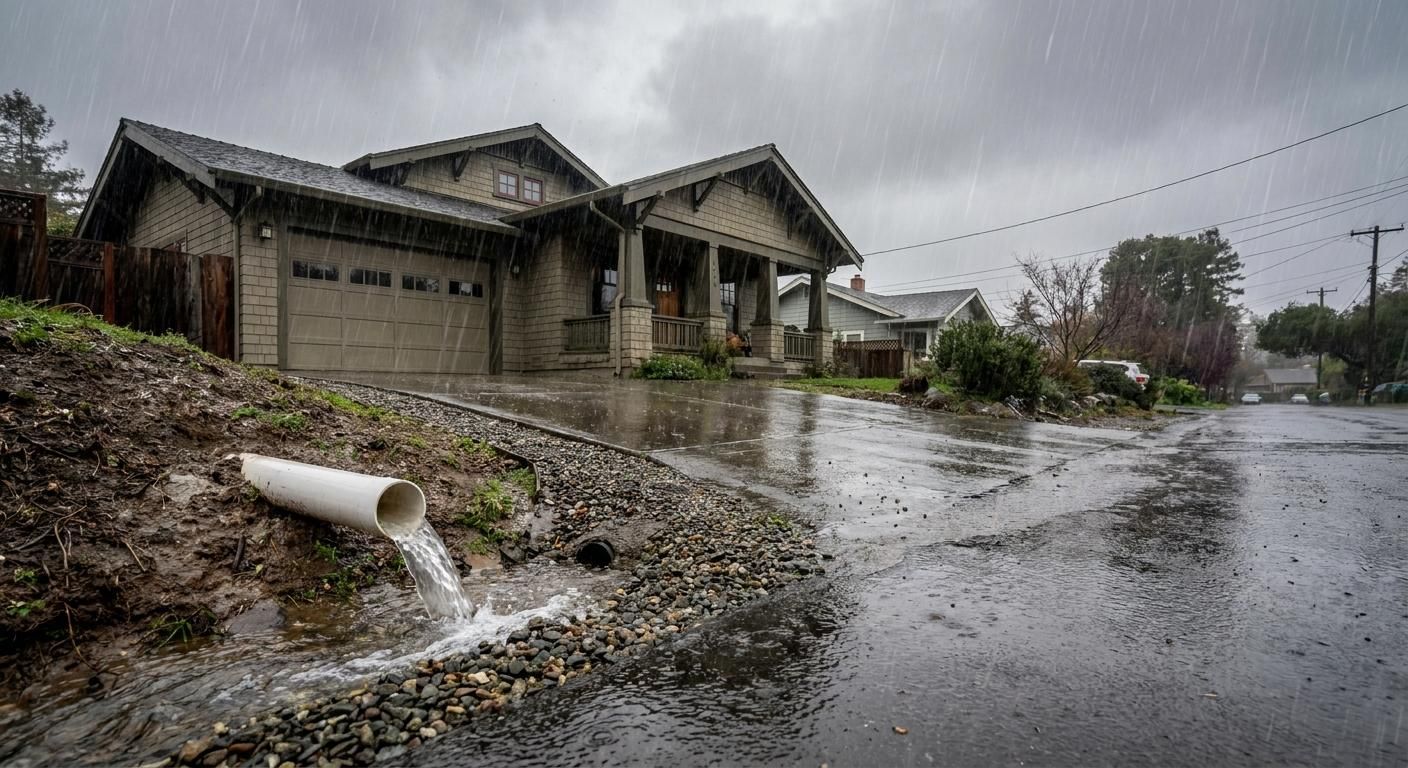
The best way to maintain your drain during the wet season is by keeping a watchful eye on how it handles our heaviest storms.
Observe During and After Heavy Rain
During the wet season (November through March in the Bay Area), the maintenance task is observation. Walk the property during or immediately after a heavy rain. Check that water is flowing from the discharge point. Look for standing water anywhere along the drain line or near the foundation. If water is pooling in an area the French drain was installed to protect, something has changed.
Watch During Atmospheric River Events
Pay attention during atmospheric river events. If discharge slows during heavy rain, the pipe needs flushing before the next storm. On Orinda's hillside lots, where runoff funnels downslope and hits the drain with real force, these big storms are exactly when a marginal system shows its limits. You can't clear a blockage mid-storm, but noting where and when the system struggled tells you exactly what to address when things dry out.
Spring: Flush and Inspect
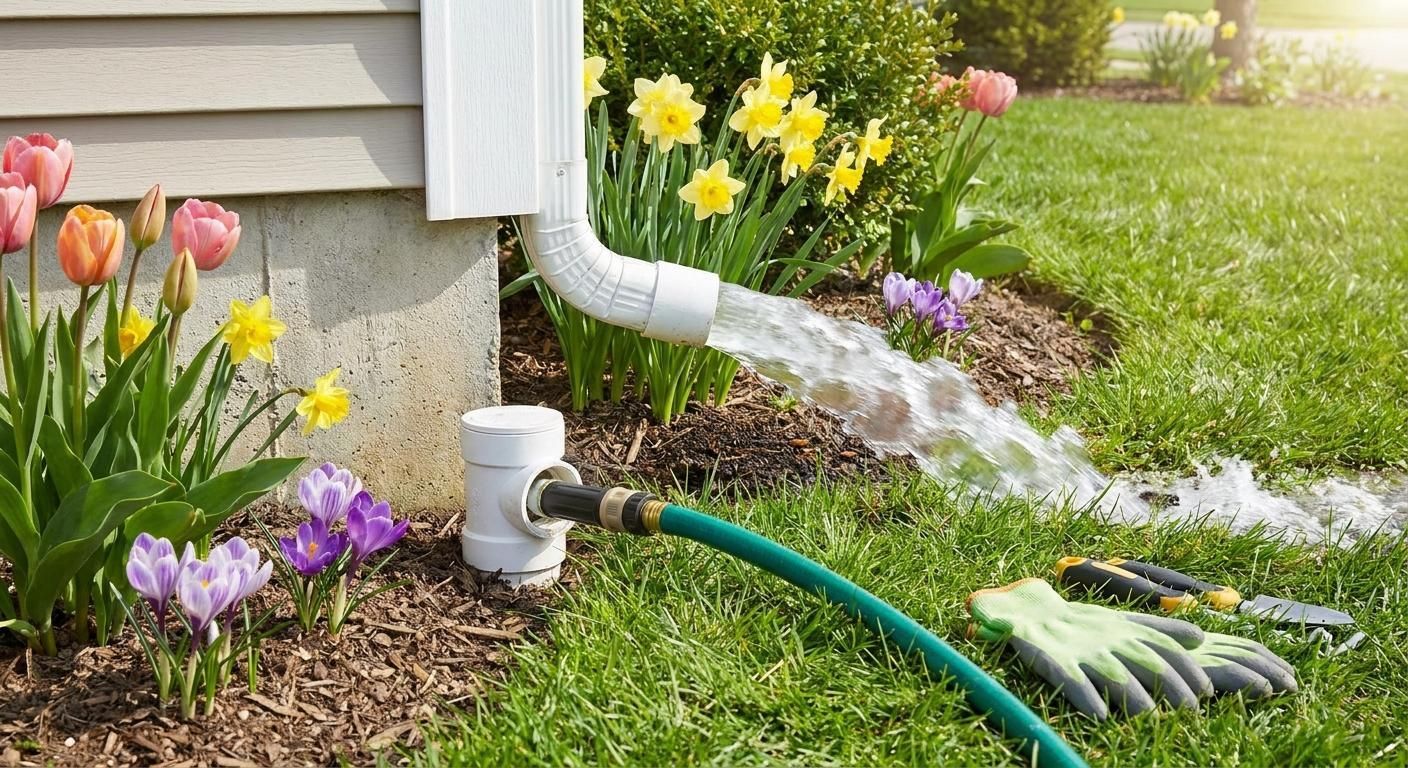
As the spring flowers bloom, give your drainage system a fresh start by clearing out the winter sediment before the dry season sets in.
Flush the System
Spring is when you actually clean French drains. From April through May, flush the system by inserting a garden hose with a high-pressure nozzle into the cleanout port or the highest inlet. Run water at full pressure for several minutes. Watch what comes out of the discharge end. Cloudy water is normal; chunks of sediment or clay mean the pipe needed it. Flush until the discharge runs clear.
Inspect Outlets and Catch Basins
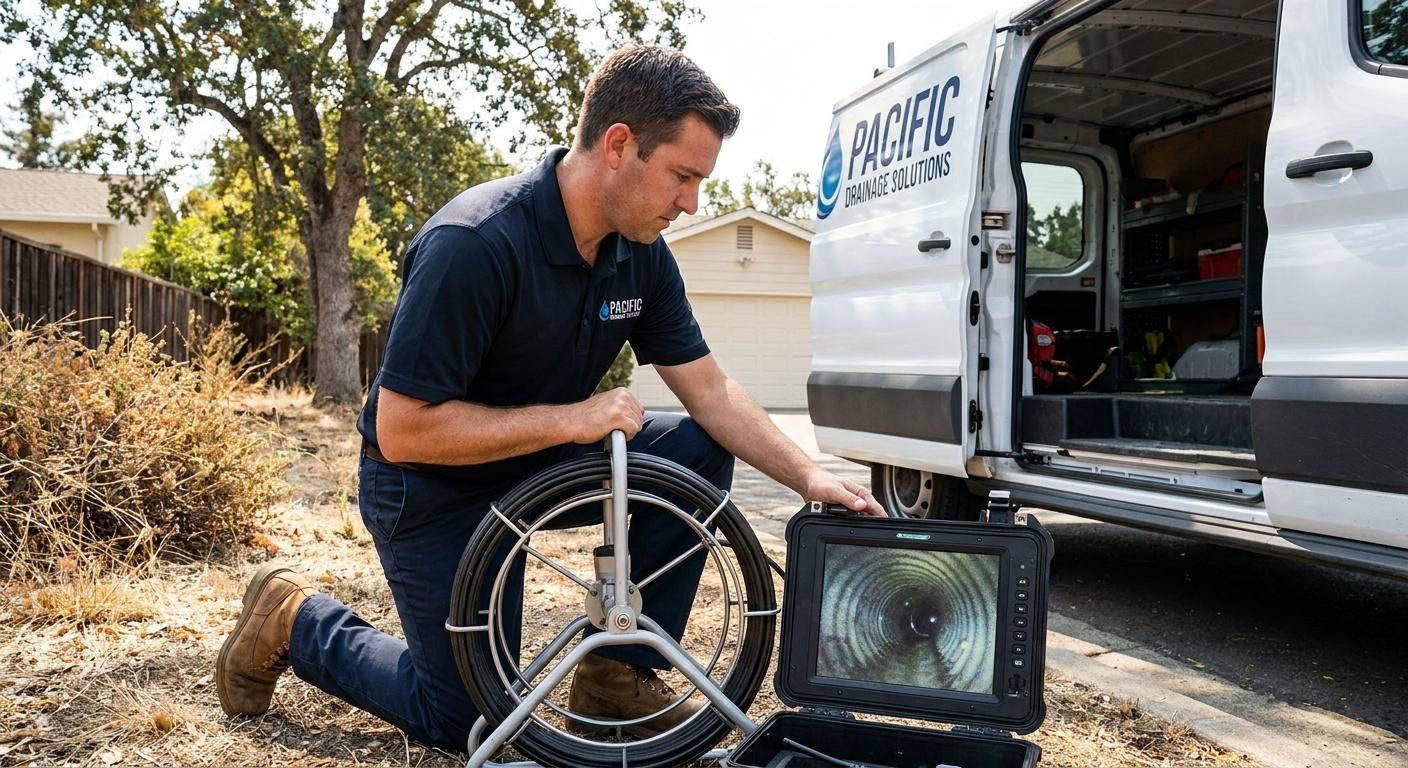
After flushing, inspect the outlet for damage and check that water still flows away from the property. Scoop out any sediment from catch basins. A spring flush prepares the system for next winter. If you find that the system needs more than a flush (persistent slow drainage or sediment that won't clear), a professional inspection can scope the pipe to check for root intrusion, crushed sections, or filter fabric failure.
Frequently Asked Questions
How often should I flush my French drain?
A French drain should be flushed at least once per year, ideally in spring after the rainy season ends. In the Bay Area, where clay soil produces fine sediment that can accumulate in the pipe over a single wet season, an annual spring flush clears out silt before it hardens into a blockage over the dry summer. If your property has heavy tree cover or sits at the base of a slope where runoff carries extra debris, flushing twice a year (once in fall before the rains and once in spring after) is worth the effort.
Can I maintain a French drain myself, or do I need a professional?
Most routine French drain maintenance (clearing grates, flushing with a garden hose, checking outlets, and observing flow during rain) can be done by a homeowner with basic tools. Professional help is warranted when flushing doesn't restore normal flow, when the ground above the drain line sinks or develops a depression, or when you suspect root intrusion or a crushed pipe. A professional can run a camera scope through the pipe to diagnose what's happening underground without digging.
What happens if I never maintain my French drain?
A French drain that receives zero maintenance will eventually clog typically within 5 to 10 years in Bay Area clay soil, though failure can happen faster if the system wasn't wrapped in quality filter fabric at installation. Clay particles gradually fill the perforations and gravel bed. Once fully clogged, water backs up or bypasses the drain entirely, and the only fix is excavation and replacement. Annual flushing prevents this.
Book Your Drainage System Checkup
French drain maintenance takes an hour or two a year and buys decades of reliable drainage. The East Bay's clay soil makes maintenance non-optional. Skip a season and sediment buildup begins. If you haven't had your system inspected recently, or if you're unsure whether it's flowing properly, now is the right time to check.
Cardona Construction offers drainage inspections and maintenance for East Bay homeowners. Call (925) 642-6349 or schedule your inspection online.