
Concrete Driveway Thickness: How Thick Should Your Driveway Be?
The right concrete driveway thickness for standard passenger vehicles is 4 inches, rising to 5 inches for heavier trucks or RVs. That's the number most homeowners come looking for, and it's a fine place to start. But it's only one of the variables that decides whether a driveway cracks in year three or holds steady at year twenty. The slab's compressive strength, typically 3,000 to 4,000 PSI for residential work, matters just as much and what's underneath the concrete matters most of all.
Cardona Construction has been pouring reinforced concrete driveways across Alameda and Contra Costa counties for over 40 combined years. After many tear-outs in El Cerrito, Oakland, and Walnut Creek, the pattern is clear: the slabs that fail early sit on uncompacted soil, skip the steel, or were poured too thin to save a few hundred dollars. The ones that last work as a system, with the base, reinforcement, thickness, and drainage all doing their part. In this blog post, we explain how thick your driveway should be, when to step up to 5 inches, and why each layer beneath the surface earns its place.
How Thick Should a Residential Concrete Driveway Be?
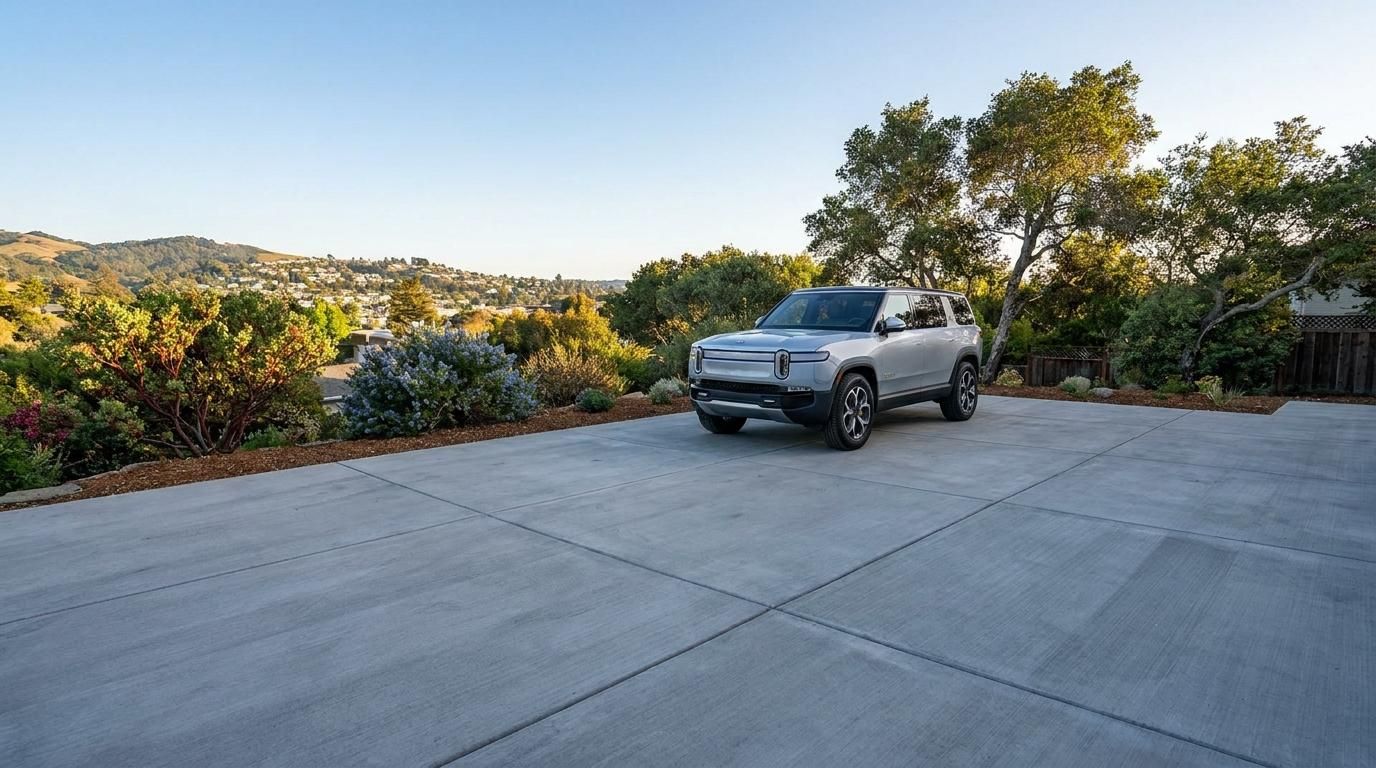
A 4-inch slab is the residential standard, backed by Portland Cement Association (PCA) and American Concrete Institute (ACI) guidelines. This thickness is used by most California builders as the residential minimum. It handles sedans, SUVs, and light pickups when the concrete reaches 3,000 to 4,000 pounds per square inch (PSI) of compressive strength on a properly compacted base.
When 5 Inches Makes Sense
Increasing to 5 inches adds roughly $1 to $2 per square foot. It's worth it when the driveway will see heavy vehicles regularly, when the subgrade is expansive clay (common across the East Bay), or when you want maximum crack resistance over a 25- to 30-year period. The extra inch roughly doubles the slab's flexural strength, the measurement indicating how well it resists cracking when the ground underneath shifts.
A 3.5-inch slab, which some contractors bid to cut costs, will typically show its first structural crack within two to three wet-dry cycles on Bay Area clay. Ultimately, saving a few dollars on materials upfront isn't worth the risk when you consider that a premature failure means paying for a complete driveway tear-out and replacement down the road.
Why Reinforcement Matters More Than an Extra Half-Inch
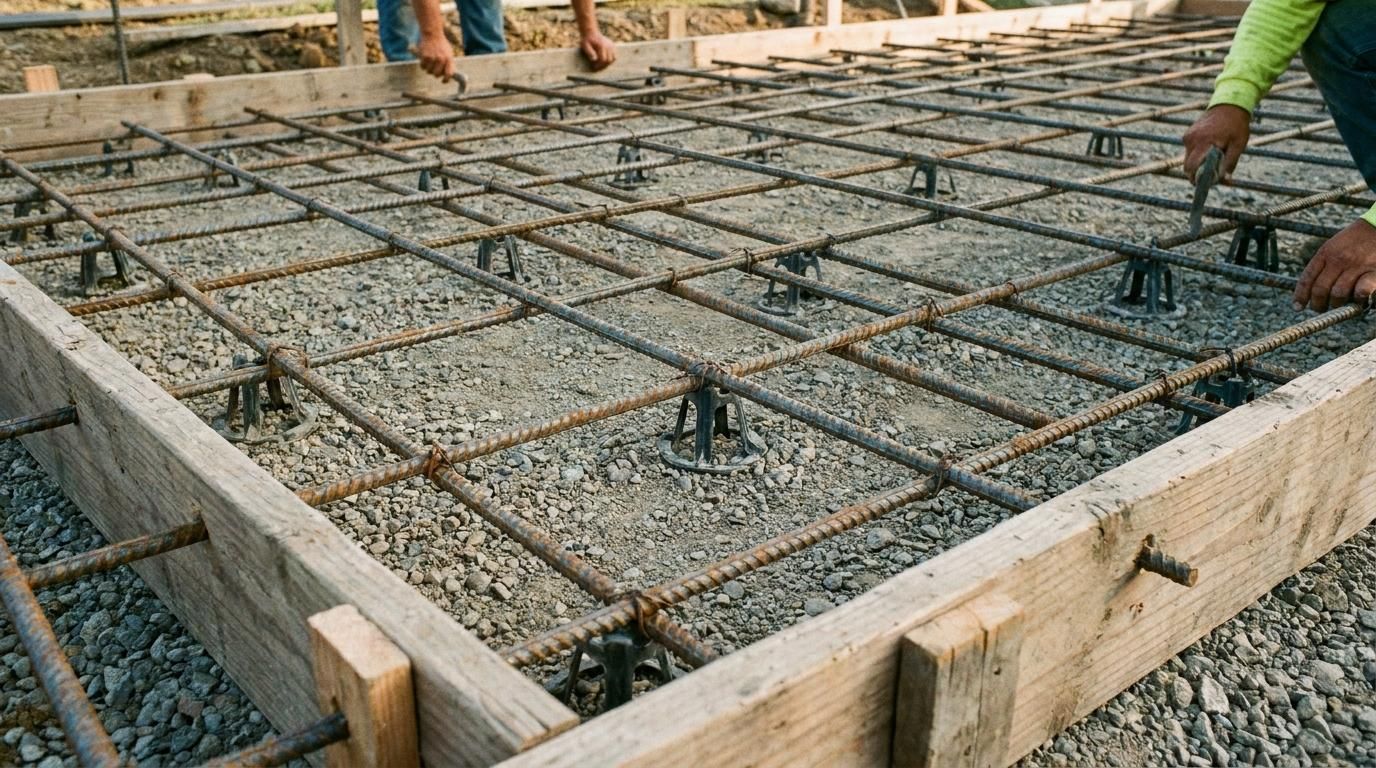
A 4-inch slab with steel reinforcement will outlast a 6-inch unreinforced slab in most Bay Area installations. Concrete is strong in compression but weak in tension, meaning it handles weight but tears apart when the ground pulls it in two directions. On East Bay hillside properties, the shear forces make reinforcement essential.
What Bay Area Soil Does to a Driveway
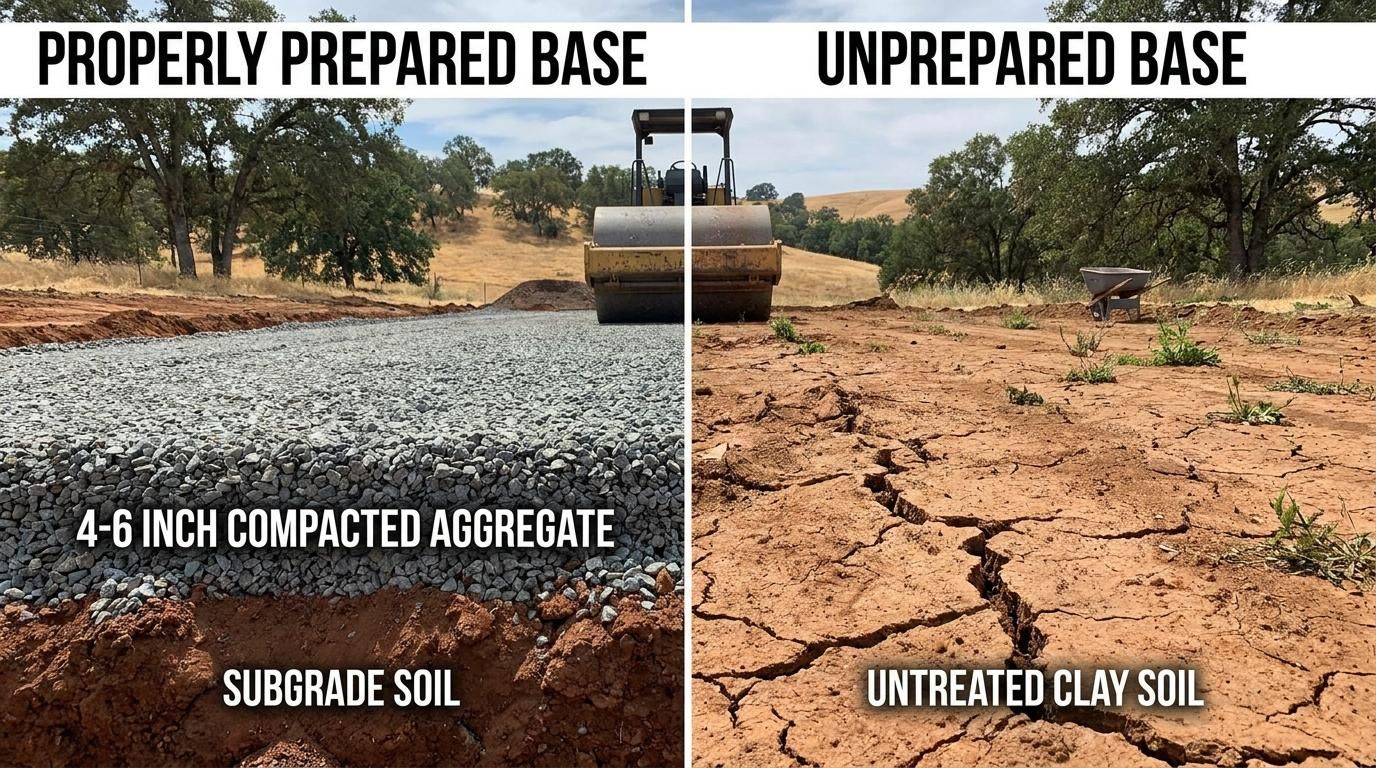
East Bay clay soil expands by 5% to 10% in volume when saturated and shrinks as it dries, creating a moving platform under the slab. A driveway on uncompacted clay heaves in winter rains and settles in summer drought. The slab must be able to flex with the movement every time. This is a common story on Lafayette's hillside lots, where the soil is especially active and a poorly prepped driveway shows it within a few seasons.
To address this concern, a compacted aggregate base (typically 4 to 6 inches of crushed stone) separates the slab from the active clay layer. Drainage is equally critical. Water pooling at the slab’s edges undermines the driveway regardless of thickness. Cardona Construction's drainage expertise means every driveway design takes into account the slope and water direction from the start, a detail most driveway-only contractors overlook.
Frequently Asked Questions
Can I pour a concrete driveway at 3 inches to save money?
Pouring a concrete driveway at 3 inches isn’t recommended and won't meet most building code minimums, which require 4 inches for residential driveways. A 3-inch slab lacks the structural cross-section to resist bending forces from soil movement and vehicle weight. On Bay Area clay, a 3-inch slab will almost certainly crack within two to three years. The material savings (a few hundred dollars on a standard two-car driveway) are dwarfed by the cost of a full tear-out and replacement.
Does a thicker concrete driveway cost significantly more?
Upgrading from 4 inches to 5 inches adds roughly $1 to $2 per square foot to the cost of the concrete driveway, or about $400 to $1,000 more on a standard two-car driveway. The add expense is modest relative to the benefit: the extra inch roughly doubles the slab's flexural strength. For driveways that will see delivery trucks or RVs, or for properties on expansive Bay Area clay, the added thickness pays for itself by preventing structural crack repair or early slab replacement.
Is steel reinforcement really necessary if the concrete is thick enough?
Steel reinforcement is necessary for any Bay Area concrete driveway regardless of thickness, because thickness alone handles compressive strength but not tensile stress. The East Bay's clay soil expands and contracts seasonally, creating bending forces that crack unreinforced slabs. Welded wire mesh or rebar placed at the slab's mid-depth absorbs that tension. Cardona Construction includes steel reinforcement as a standard component of every driveway installation.
Get a Driveway That’s Built to Last
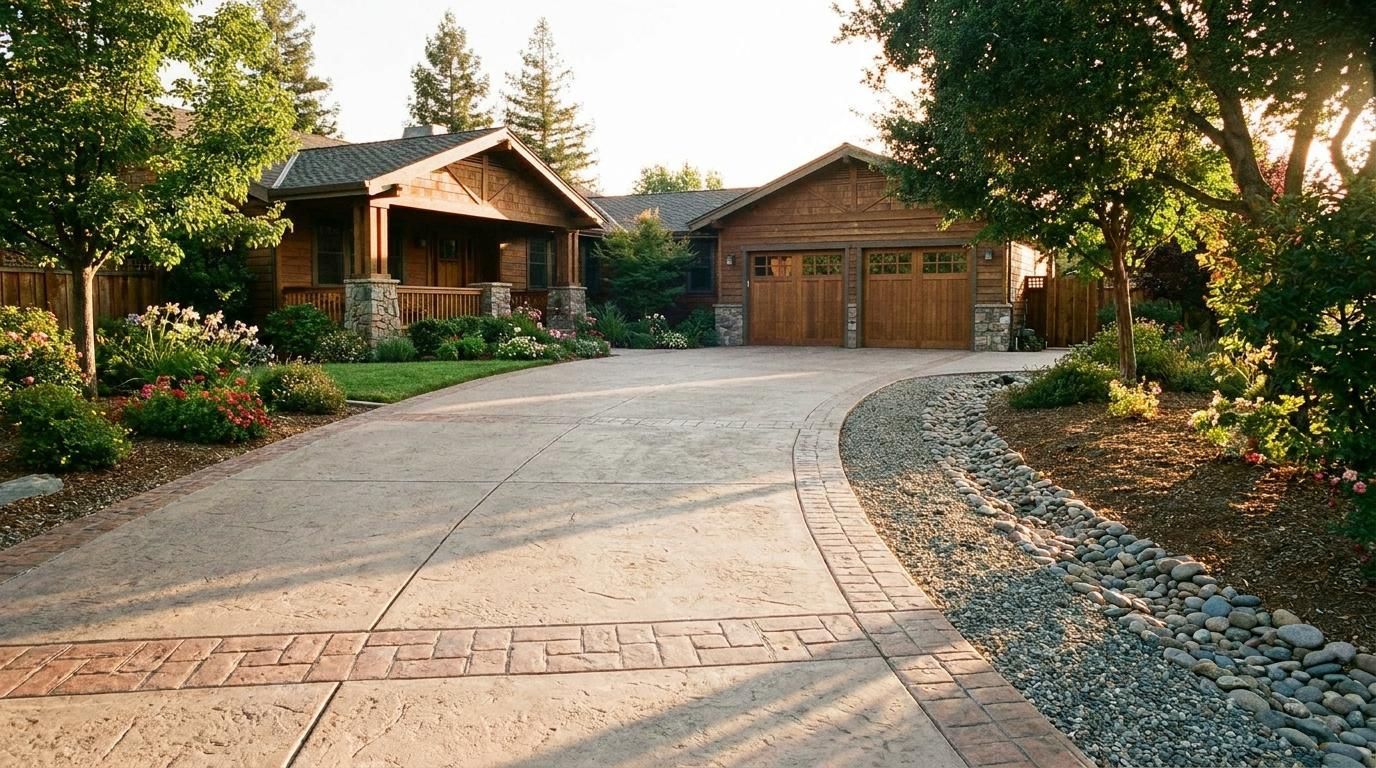
Thickness is one variable in a driveway that works as a system. A 4-inch reinforced slab on a compacted aggregate base, with drainage designed in from the start, will outlast a thicker slab that skips any one of those steps. In the East Bay, the prep work under the concrete decides the outcome more than the pour itself.
Cardona Construction provides free evaluations for East Bay homeowners, including El Cerrito, Oakland, Berkeley, Walnut Creek, and surrounding communities. Call (925) 642-6349 or schedule your free consultation online.