
How Deep Should a French Drain Be? Depth Guide by Purpose
How deep a French drain should be depends on what you're trying to protect. For a soggy lawn, 12 to 18 inches is usually enough. For a foundation or basement, you need 24 to 36 inches, sometimes more. The 18- to 24-inch range you'll find online assumes sandy soil that drains straight down, but the East Bay doesn't have that. It has heavy clay that holds water near the surface and pushes it sideways against foundations, so an 18-inch drain often sits in dry dirt while the water it was meant to catch slides past at footing depth.
That's why depth isn't a single number here. Getting it wrong means moving a lot of dirt without solving the problem. Cardona Construction designs and installs French drains across Alameda and Contra Costa counties. We know that proper the depth is determined by the site, not a rule of thumb. Let’s talk about the right depth for surface water versus foundation protection, and what the East Bay's clay does to both.
French Drain Depth for Surface Water Control
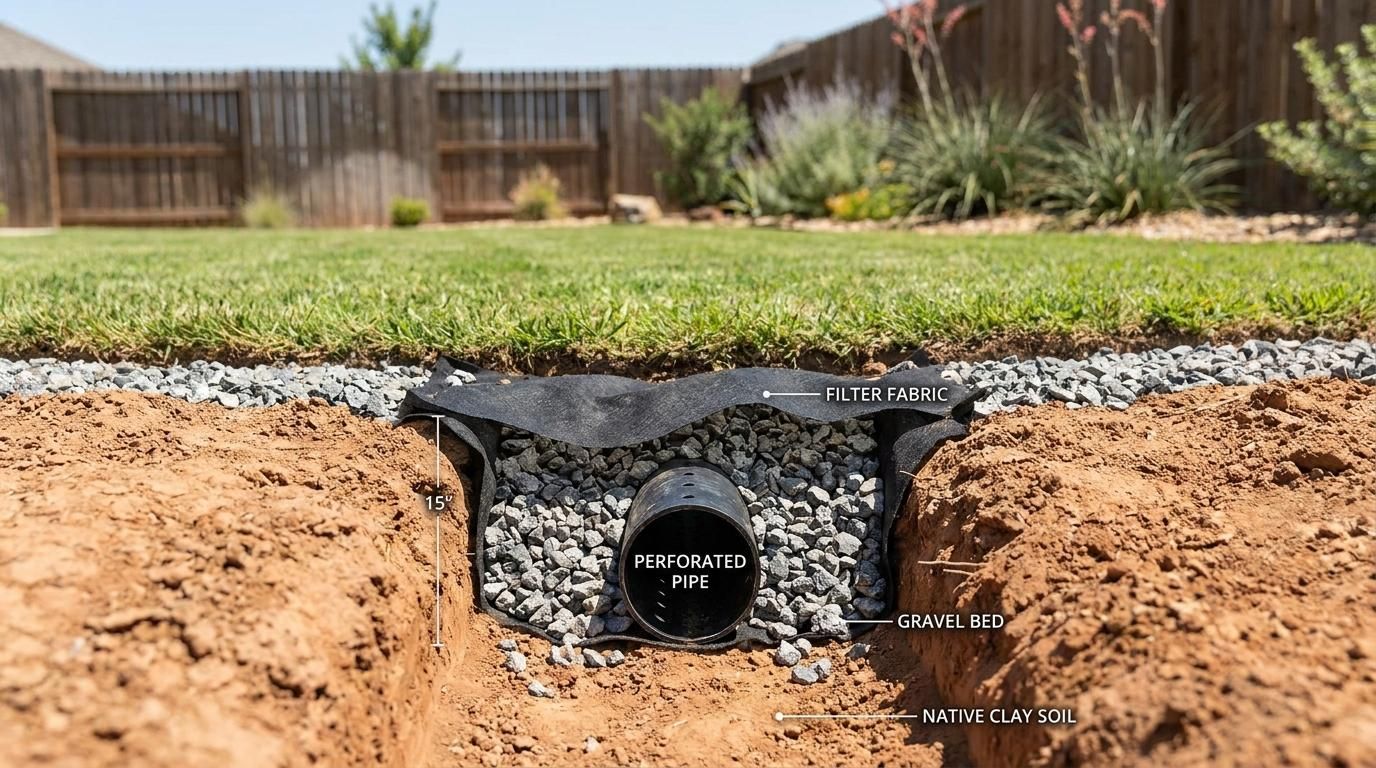
For yard drainage, including yards with soggy lawns, standing water in planting beds, runoff from a patio or driveway, a French drain at 12 to 18 inches deep is usually sufficient. At this depth, the perforated pipe in a gravel bed wrapped in filter fabric captures water moving through the topsoil before it pools. This shallow drain handles surface water but doesn’t protect a foundation.
French Drain Depth for Foundation Protection
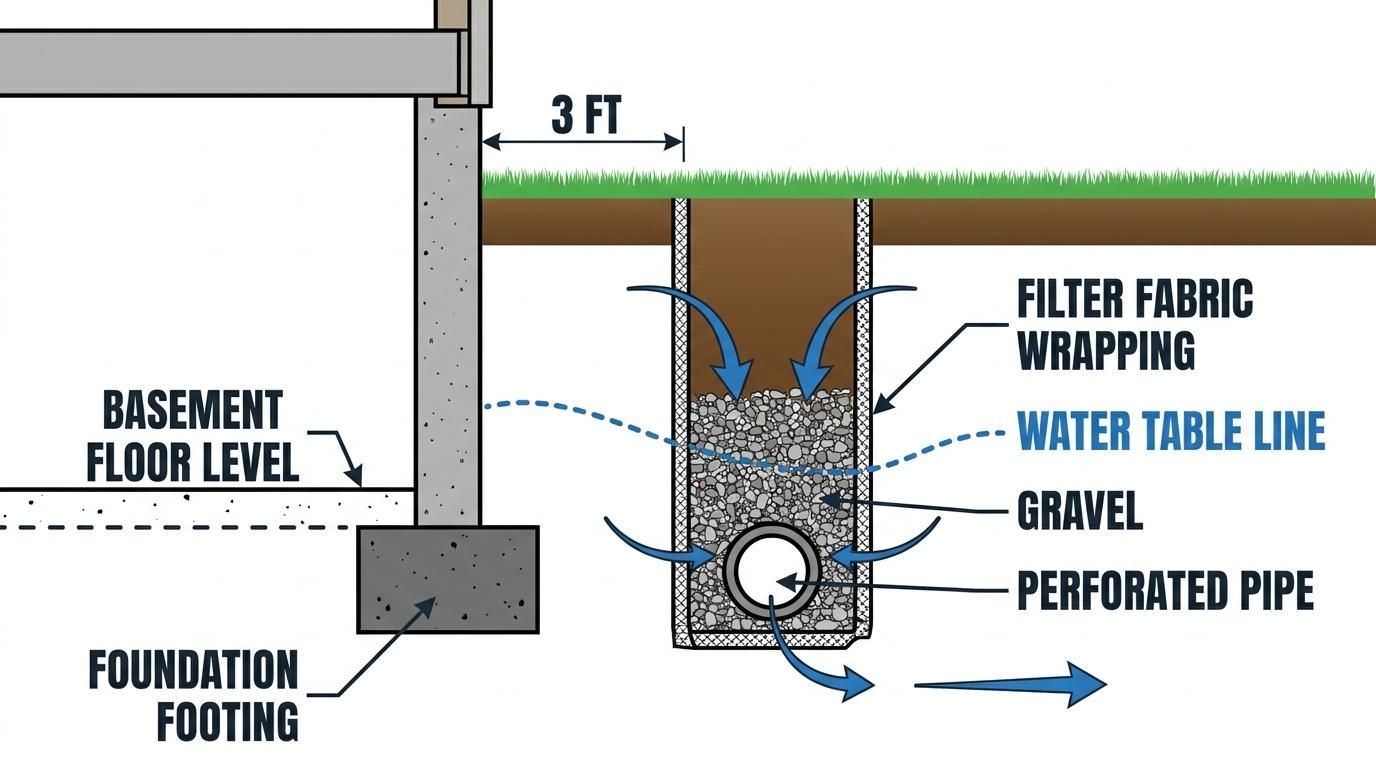
A French drain installed to protect a foundation or basement needs to go deeper: 24 to 36 inches, and in some cases deeper still. The pipe must sit below the level of the basement floor or the bottom of the foundation footing so it collects groundwater before it reaches the structure.
This deeper excavation requires professional trenching equipment to maintain proper slope and avoid utilities. The payoff is a dry basement even during heavy storms.
What Bay Area Clay Soil Means for French Drain Depth
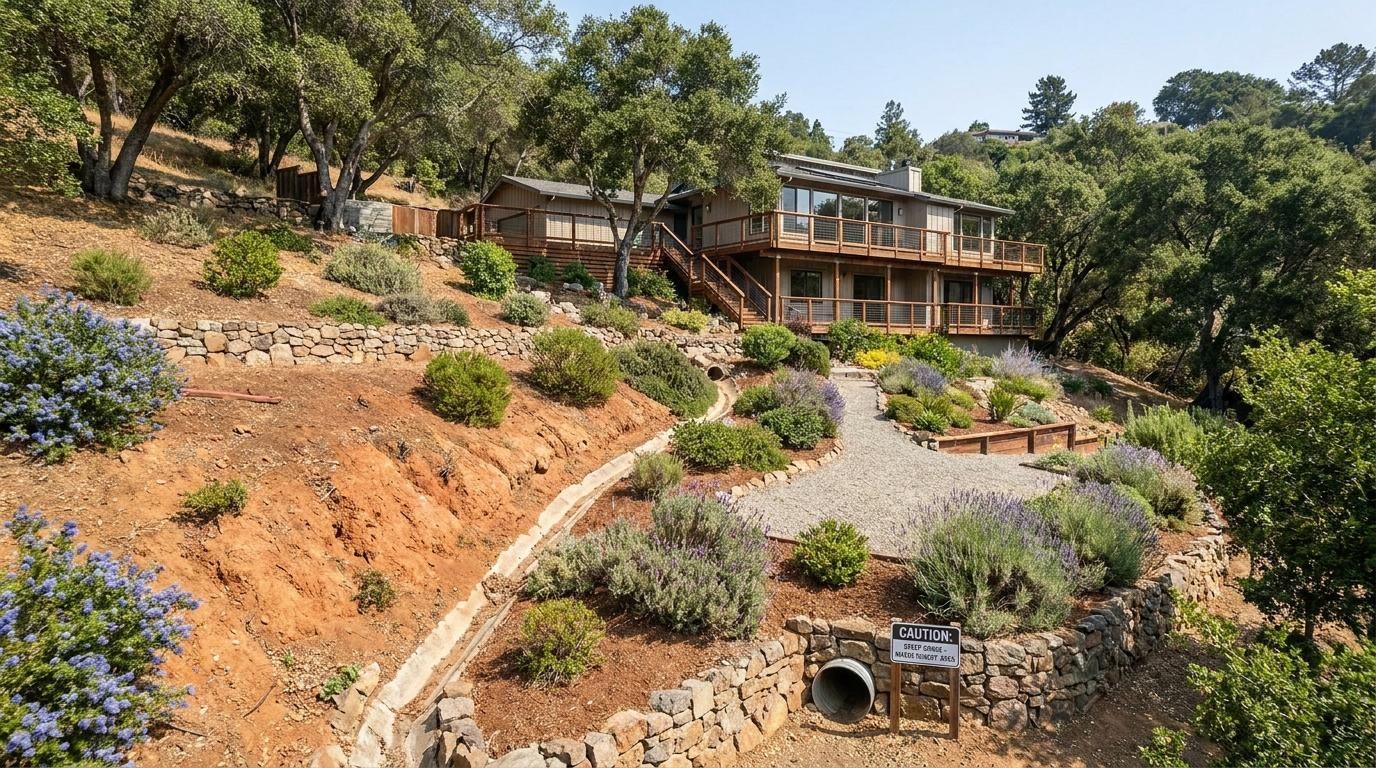
To keep your home dry, your foundation drainage design needs to account for how East Bay clay soil traps and redirects water.
East Bay clay changes the depth you’ll need. Clay soil is nearly impermeable. Water doesn't drain through it; it moves laterally along it. A French drain at 18 inches in clay might sit in dry soil while water slides past above it. A French drain at 12 inches might catch that lateral flow but miss the deeper saturation building up over days of rain.
For hillside properties ( Berkeley Hills, Oakland Hills, Orinda), slope compounds the problem. Water moving downslope through clay concentrates against foundation walls with significantly more pressure than water on flat ground. Cardona Construction assesses soil, slope, and drainage before determining the right depth. A custom French drain design based on actual site conditions always outperforms a one-size-fits-all depth.
Frequently Asked Questions
Can I dig a French drain too deep?
You can dig a French drain too deep, and the consequences depend on where the drain discharges. A French drain that sits below the level of its outlet (the point where water exits to daylight, a dry well, or a storm drain) cannot drain by gravity. Water will sit in the pipe and back up through the system. The trench must maintain a consistent downward slope of at least 1% (a 1-foot drop per 100 feet of run) from the drain to the discharge point. Deeper isn’t automatically better. The depth must match the outlet elevation.
Does a French drain need to be below the frost line in California?
Frost line isn’t a concern for French drain depth in the Bay Area. The frost line in coastal Northern California is effectively zero. The ground doesn’t freeze to a depth that affects underground drainage pipes. This is one advantage of installing drainage systems in this region: depth decisions are driven entirely by water movement, soil type, and what the drain is protecting, not by freeze-thaw requirements.
How far from the foundation should a deep French drain be installed?
A French drain protecting a foundation should be installed 2 to 3 feet away from the foundation wall, running parallel to it. Getting closer risks undermining the footing during excavation. Installing farther away leaves a band of unprotected soil between the drain and the foundation. Cardona Construction's site evaluations determine the exact setback based on footing depth, soil type, and the property's slope. We never guess the distance.
Schedule Your French Drain Consultation
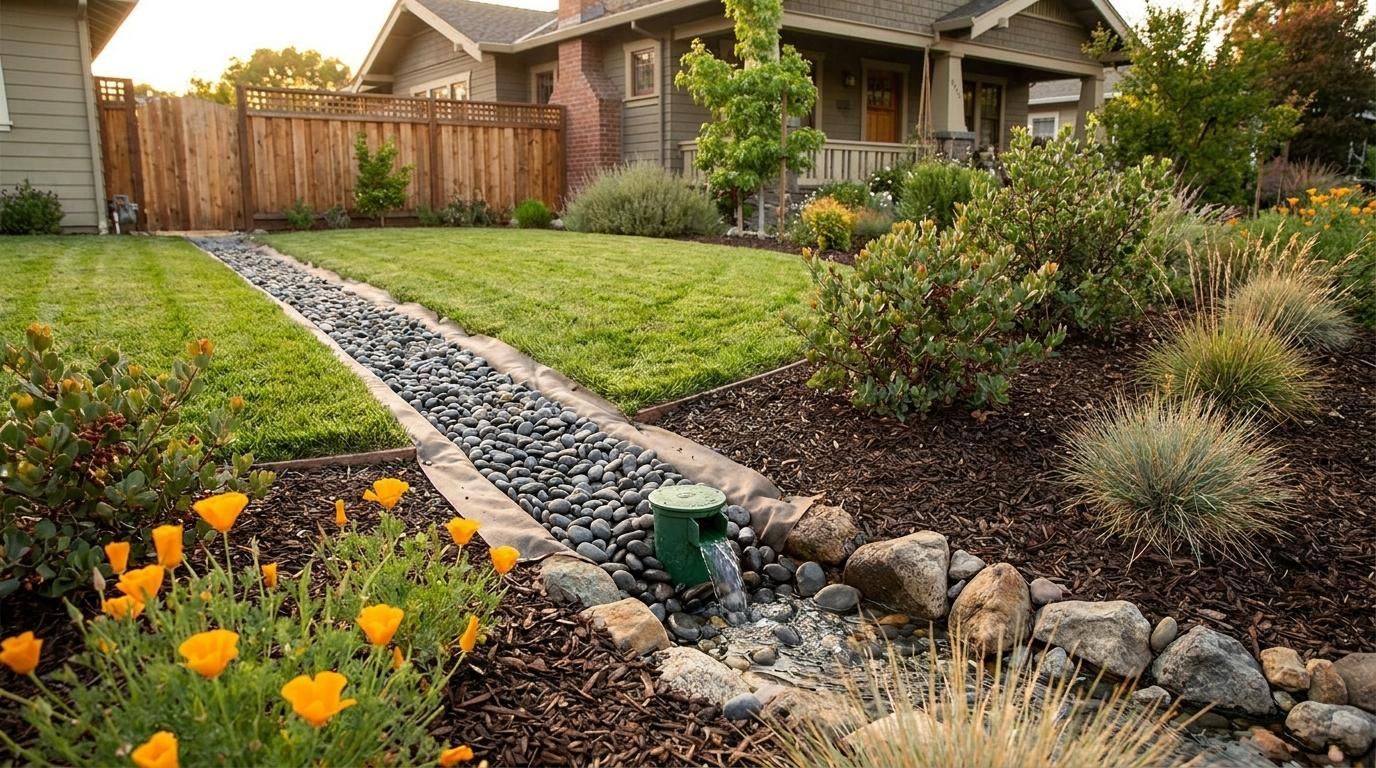
A French drain's depth is a site-specific calculation based on what you're protecting, the soil you're digging into, and where the water has to go. In the East Bay's clay and hillside terrain, getting it right is the difference between a drain that works for decades and one that just rearranges the mud.
Cardona Construction offers free on-site evaluations for homeowners throughout the East Bay. Our team assesses every property's soil and drainage conditions. Call (925) 642-6349 or request your free consultation to get started.