
Foundation Cracks: When to Worry and When to Relax
A crack in your foundation wall usually isn't a crisis. Most foundations develop small cracks as they cure and settle, and plenty of them never become a structural problem. What separates a cosmetic crack from a serious one is its width, its direction, and whether it's changing over time. Get those three things right and you'll know whether you're looking at a $20 tube of sealant or a real repair.
Behind almost every crack, though, is something pushing, pulling, or saturating the concrete from outside. In the East Bay, that something is usually clay soil, swelling with the winter rains and shrinking through the dry summer. A crack that opens a little wider each March is telling you about the ground underneath. Cardona Construction has repaired and replaced countless foundations across Alameda and Contra Costa counties. The homeowners who catch problems early are almost always the ones who knew which crack type they were looking at. In this article, we take a closer look at five common types of cracks and how urgently you need to act.
Hairline Cracks: Usually Cosmetic
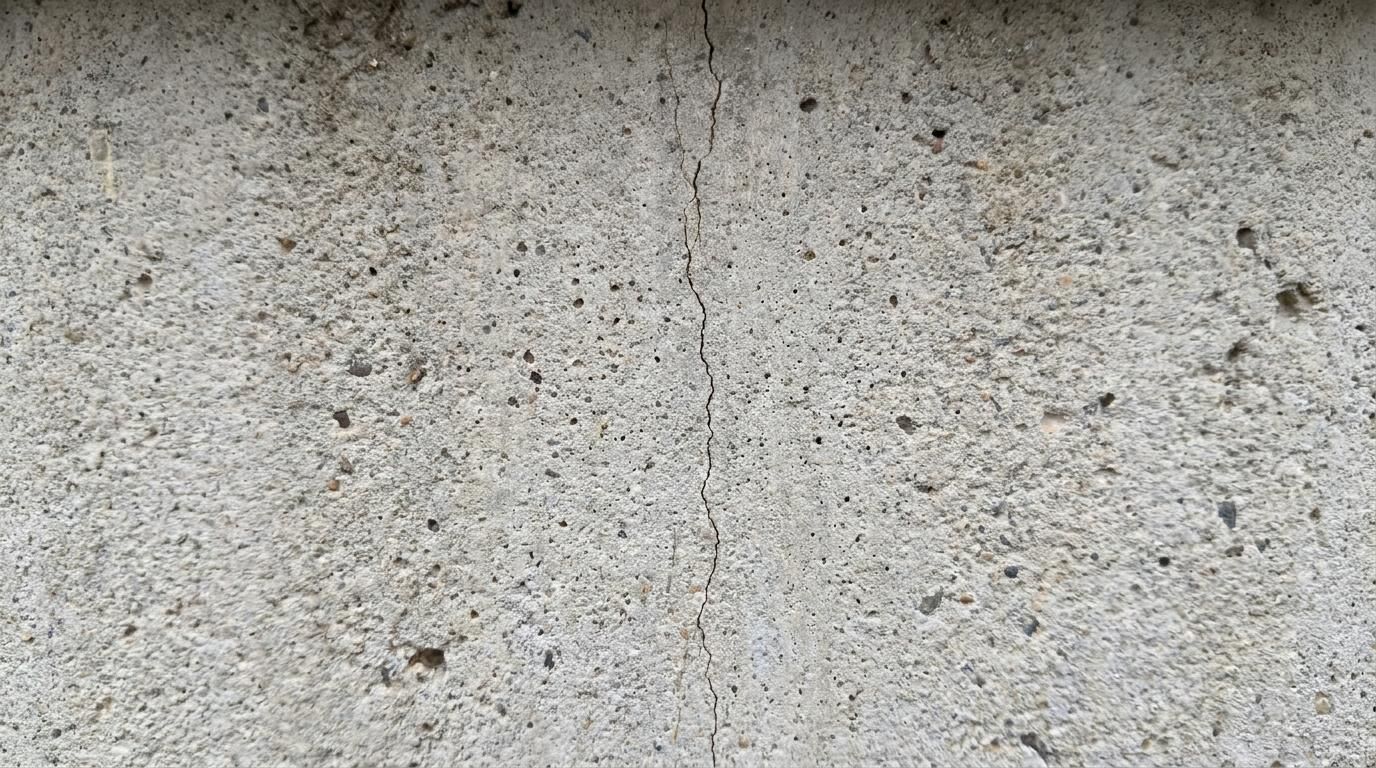
Hairline cracks are cracks thinner than 1/8 inch, running vertically or in a web-like pattern. These are are shrinkage cracks from the concrete curing process, created as concrete shrinks and hardens. If a hairline crack widens past 1/8 inch or lets water through, it needs to be evaluated.
Vertical Cracks: Common, But Worth Monitoring
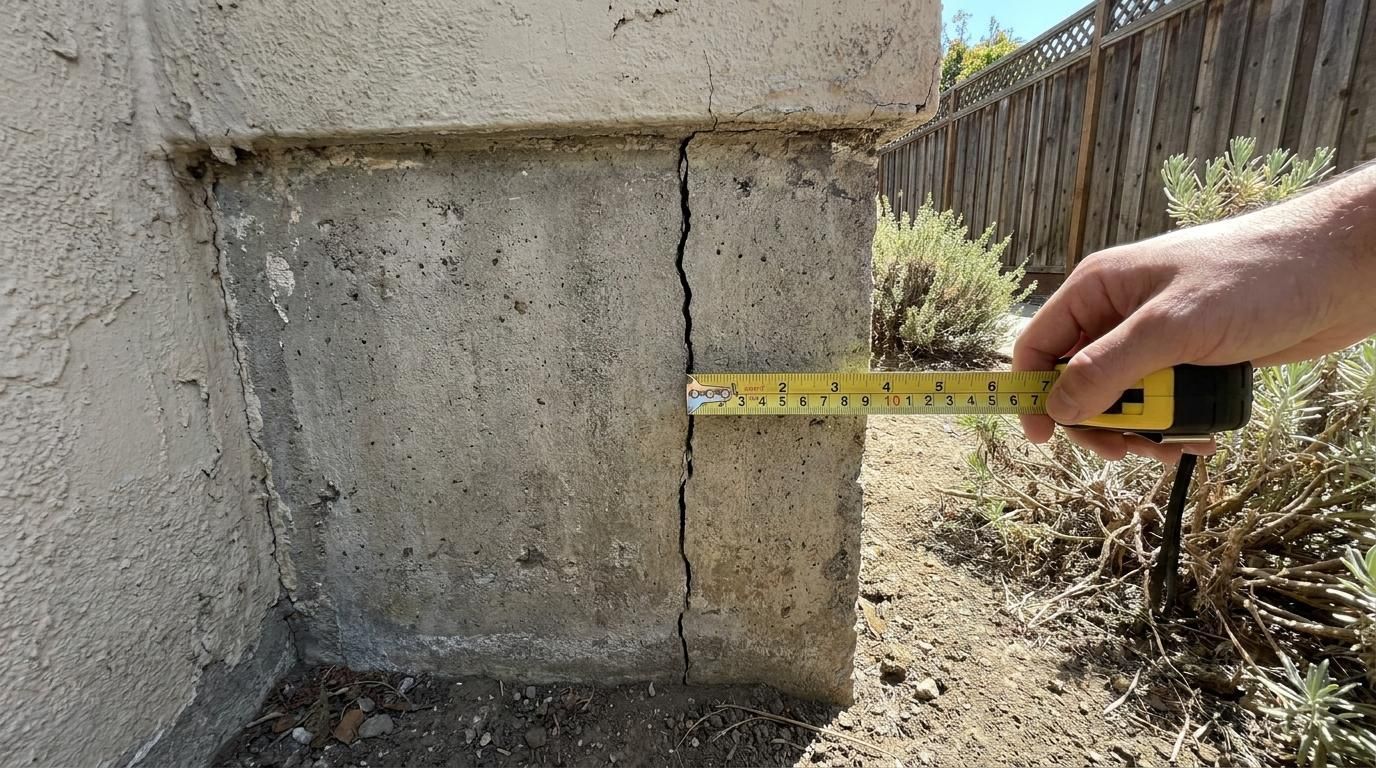
Vertical cracks are the most common type and are usually caused by normal settling. If the crack is narrow and dry, it's likely settling-related. We see plenty of these on Concord homes, where flatter lots tend to settle evenly and the cracks that show up are more often cosmetic than structural.
The line between settling and structural trouble is at 1/4 inch, a wider vertical crack or one where the two sides are no longer flush indicates active movement. Cardona Construction's foundation assessments measure crack width and displacement to determine whether movement is historic or ongoing.
Horizontal Cracks: The Most Serious Sign
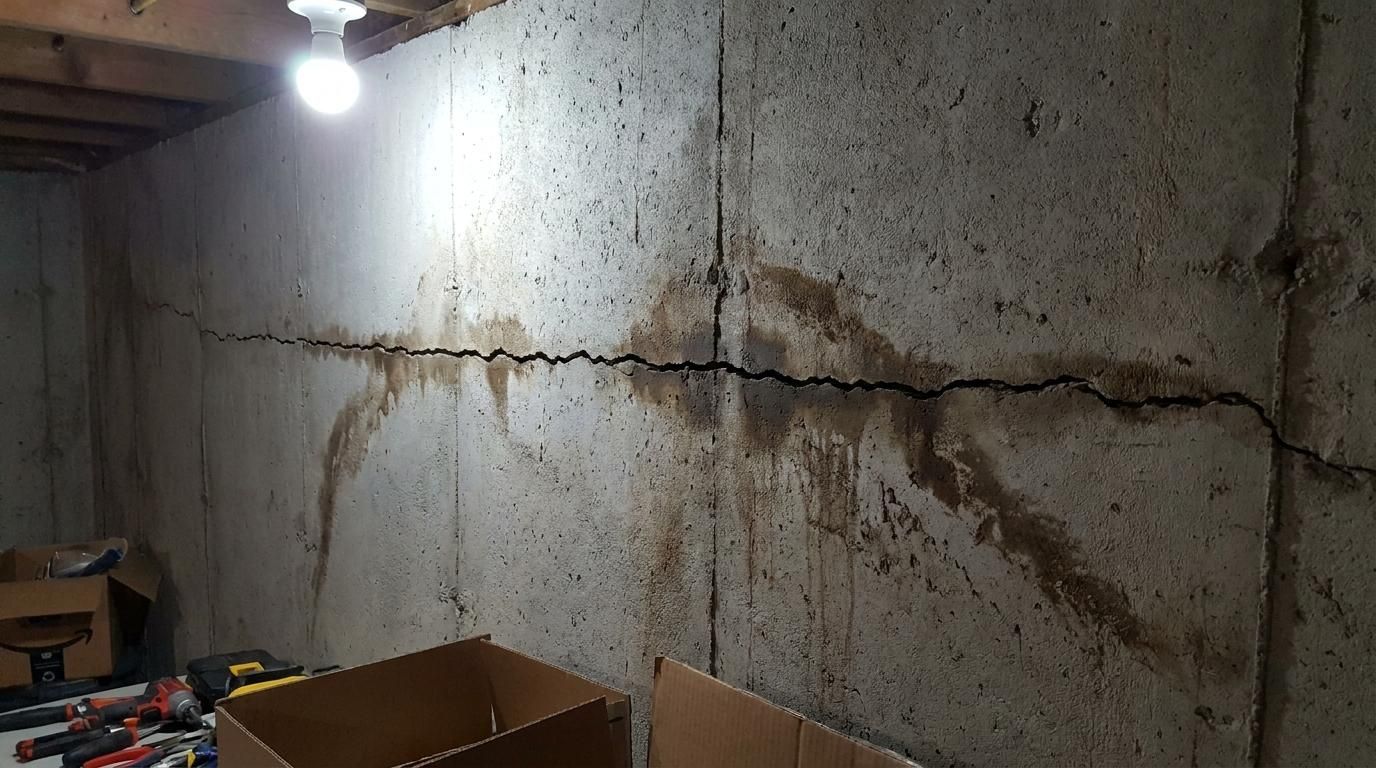
Horizontal cracks are a sign of a foundation problem and demand immediate attention. Unlike vertical cracks, which follow the wall's natural strength, a horizontal crack means the wall is bowing inward under pressure. It’s almost always caused by water-saturated soil pushing from outside. In East Bay hillside properties, groundwater moving through clay soil creates hydrostatic pressure that can bow a basement wall inward by several inches. A horizontal crack wider than 1/8 inch, or one running more than a few feet, requires professional evaluation. This isn’t a crack you monitor—it's one you act on.
Stair-Step Cracks: A Settlement Signature
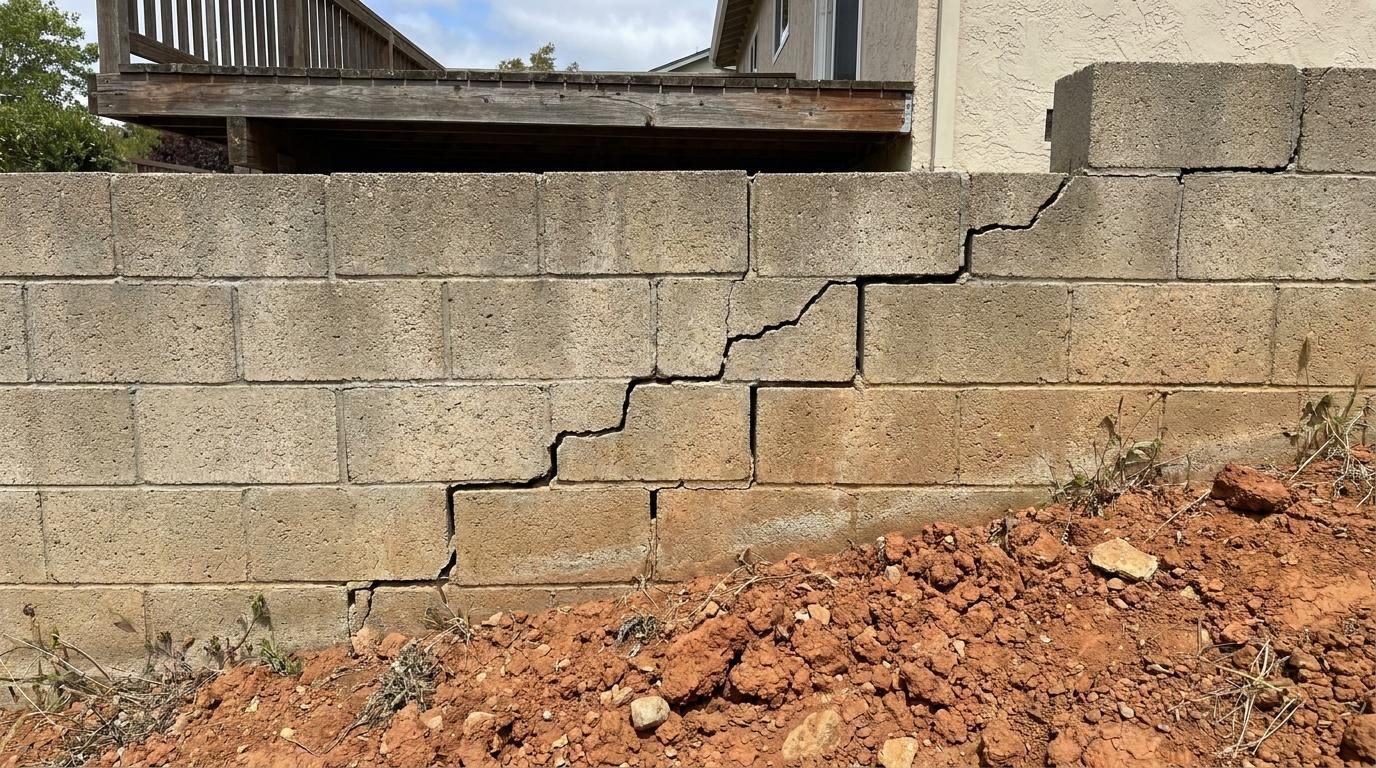
Stair-step cracks follow mortar joints in block or brick foundations, climbing diagonally like a staircase. They signal differential settlement, where one section of the foundation sinks while an adjacent section stays put. A crack under 1/4 inch that hasn't changed may be old, stabilized settlement, but one that is actively widening indicates ongoing movement—a common hazard on Bay Area hillside lots where shifting clay and water pressure undermine structural support.
While minor shifting happens, active stair-step cracks indicate structural stress usually driven by poor drainage. In the East Bay, expansive clay soil swells when wet and shrinks when dry; this relentless cycle exerts immense pressure against foundation walls and unevenly erodes the soil beneath them. Left unaddressed, active settlement can lead to sloped floors, jammed doors, and severe structural damage.
If the crack exceeds 1/4 inch or is visibly growing, call a professional immediately. Intercepting the water with a foundation-depth French drain now can stabilize the soil and prevent the need for incredibly expensive structural piering later.
Frequently Asked Questions
When should I worry about a crack in my foundation?
You should worry about a foundation crack when it’s wider than 1/4 inch, runs horizontally, is actively growing, or lets water through during rain. Hairline cracks under 1/8 inch that stay dry and don't widen are almost always cosmetic. A crack that is widening—measured over months, not years—or one accompanied by sticking doors, sloping floors, or new gaps around window frames signals active structural movement. In the Bay Area's clay soil, monitoring a crack through one full wet-dry season will tell you whether it's stable or active.
Can foundation cracks be repaired without replacing the foundation?
Many foundation cracks can be repaired without full foundation replacement, but the right method depends on the cause. Epoxy or polyurethane injection can seal and structurally rebond narrow cracks. Carbon fiber staples or straps can reinforce a wall showing early bowing. However, if the crack is caused by ongoing soil movement, poor drainage, or rusting rebar splitting the concrete from within, the repair is unlikely to last unless the underlying cause is addressed first. Cardona Construction evaluates both the crack and what caused it before recommending a repair.
Do Bay Area homes have more foundation cracks because of earthquakes?
Bay Area homes experience more foundation stress than homes in seismically quiet regions, but earthquakes are rarely the primary cause of foundation cracks. Day-to-day cracking is far more often driven by expansive clay soil expanding and contracting with seasonal moisture, a cycle that repeats every year. Seismic activity can accelerate existing damage, particularly in foundations already weakened by water infiltration or rusting rebar. A foundation with active cracks is more vulnerable in an earthquake, which is why addressing them early doubles as seismic risk reduction.
Get a Professional Foundation Assessment

Most foundation cracks are manageable if you know which type you're looking at. The difference between a $20 tube of sealant and a structural repair comes down to width, direction, and change over time. If you see cracks wider than 1/4 inch, horizontal cracks, or cracks that are growing, don't wait for the next rainy season to confirm what the soil is already telling you.
Cardona Construction provides free foundation assessments for homeowners throughout the East Bay. Call (925) 642-6349 or schedule your free assessment.