
Concrete Driveway vs Pavers: Cost, Durability, and Pros & Cons
When you're choosing between a concrete driveway and pavers, you're really weighing two different deals. Concrete is cheaper up front and behaves as one solid unit, which suits Bay Area soil movement. Pavers cost more but make repairs simpler, since you can lift and reset individual blocks. On price, concrete runs about $5 to $15 per square foot installed, while pavers land between $15 and $25.
The reason the two materials behave so differently comes down to engineering. A concrete driveway is a single reinforced slab; a paver driveway is thousands of separate units held together by sand and edge restraint. That one difference shapes how each handles clay soil, what a repair involves, and how the surface ages. Cardona Construction installs reinforced concrete driveways across Alameda and Contra Costa counties. For most homeowners, the choice comes down to four things: cost, how the material copes with clay, what upkeep looks like, and how long they plan to stay in the house. Below, we compare all four, including their lifespans and where each option falls short.
Cost Comparison: Concrete vs Pavers
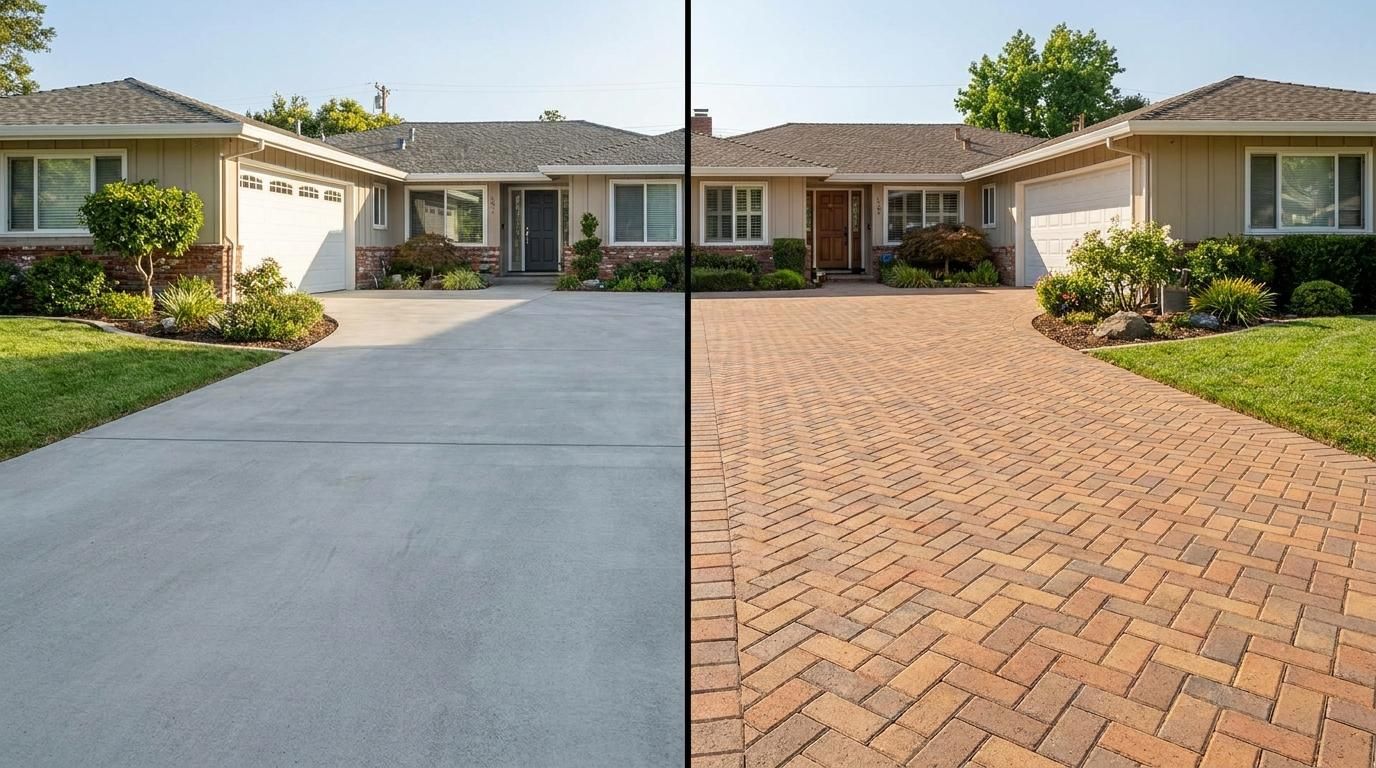
A poured concrete driveway in the Bay Area costs $5 to $15 per square foot installed for a broom finish, with stamping or coloring adding $3 to $10 per square foot. A paver driveway runs $15 to $25 per square foot installed. For a typical two-car driveway, that's $3,000 to $9,000 for concrete versus $9,000 to $15,000 for pavers.
Durability and Lifespan
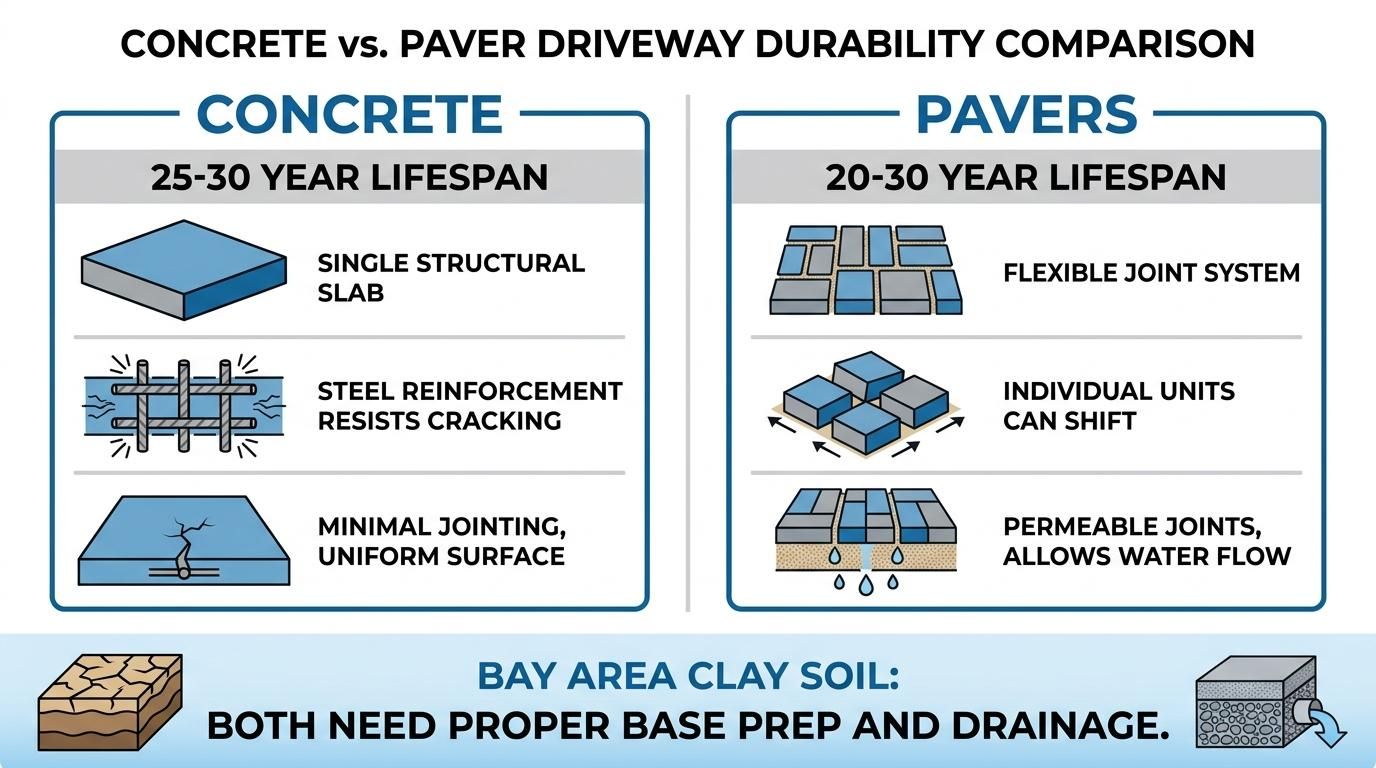
A reinforced concrete driveway lasts 25 to 30 years. Pavers reach 20 to 30 years but need more joint and base maintenance. The difference is how each handles clay soil. A concrete slab, reinforced with steel on a compacted base, withstands small soil movements as a single unit. Pavers are flexible by design: individual units shift without cracking. But when the base settles unevenly, a paver driveway develops dips that require portion-by-portion releveling, meaning more frequent work than resealing a concrete slab.
Maintenance: What Each Driveway Needs Year to Year
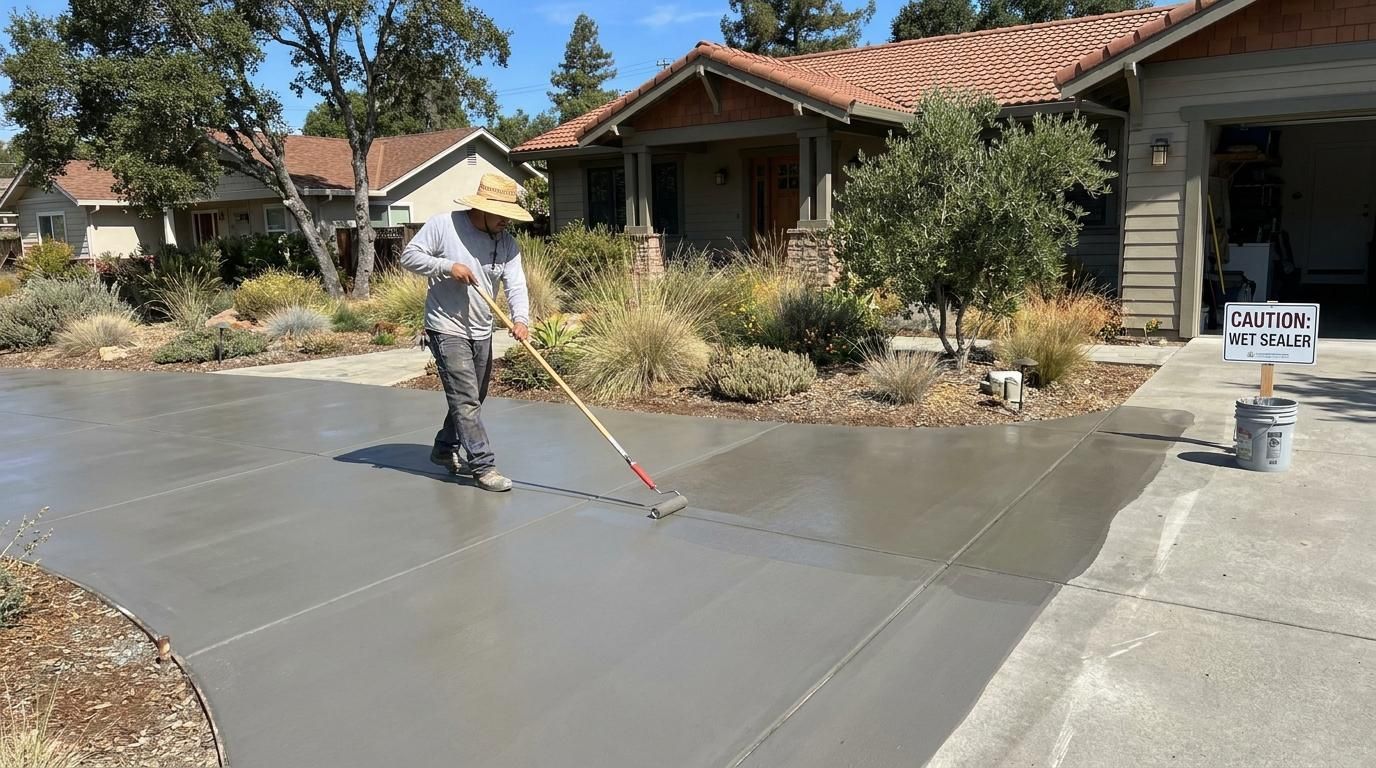
Concrete maintenance is straightforward: reseal every 3 to 5 years and address cracks promptly. Paver driveways need more ongoing attention. Weeds grow in the joints and must be removed. Polymeric sand washes out and needs refreshing every few years. Individual pavers settle or crack and must be pulled and reset. Because water drains through paver joints, the base stays exposed to moisture—which, on Bay Area clay, means the base can shift seasonally. A paver driveway simply demands more of your time each year than a concrete slab.
Bay Area Clay Soil: Which Driveway Handles It Better?
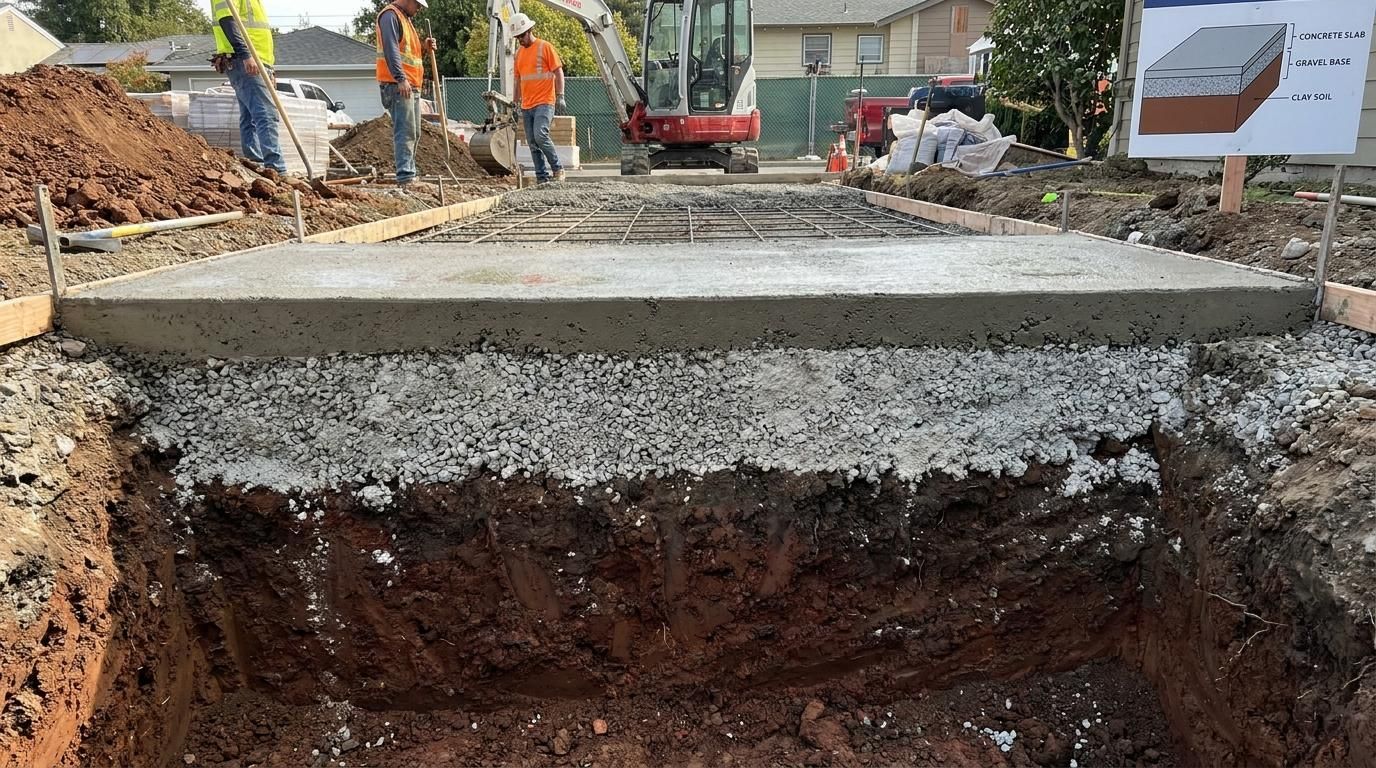
East Bay clay soil expands when wet and shrinks when dry, a seasonal cycle that stresses every driveway. Pavers absorb small movements through their joint system and can be relevelled section by section.
Concrete's answer to clay soil is preparation. A compacted aggregate base, steel reinforcement, and drainage that moves water away from the slab’s edges keep a Bay Area concrete driveway flat for decades. The cost of a concrete driveway still comes in well below the price of pavers as long as it was properly installed with the necessary base prep and reinforcement.
Frequently Asked Questions
Which lasts longer, a concrete driveway or pavers?
Both can last 25 to 30 years, but they age differently. A reinforced concrete driveway with proper base prep and regular resealing can reach 30 years. Pavers last 20 to 30 years but need more frequent joint and base maintenance. In Bay Area clay, pavers may need relevelling while a reinforced concrete slab handles minor soil movement.
Are pavers worth the extra cost over concrete?
Pavers are worth the extra cost if you prioritize flexible repairs, aesthetic variety, and the ability to pull up and reset individual sections. The paver premium is significant, roughly double the cost per square foot, but you get a driveway that can be relevelled section by section rather than saw-cut and patched. For most East Bay homeowners, including the Pleasant Hill clients we work with, concrete offers better value with lower upfront cost and comparable longevity.
Does Cardona Construction install paver driveways?
Cardona Construction specializes in reinforced concrete driveways and does not install paver driveways. Our concrete driveway installations include steel reinforcement, proper base compaction, and drainage integration—a system specifically designed for Bay Area clay soil. If you're leaning toward pavers, a hardscape or landscape contractor is the right call for that side of the project.
Start Your Driveway Project Today
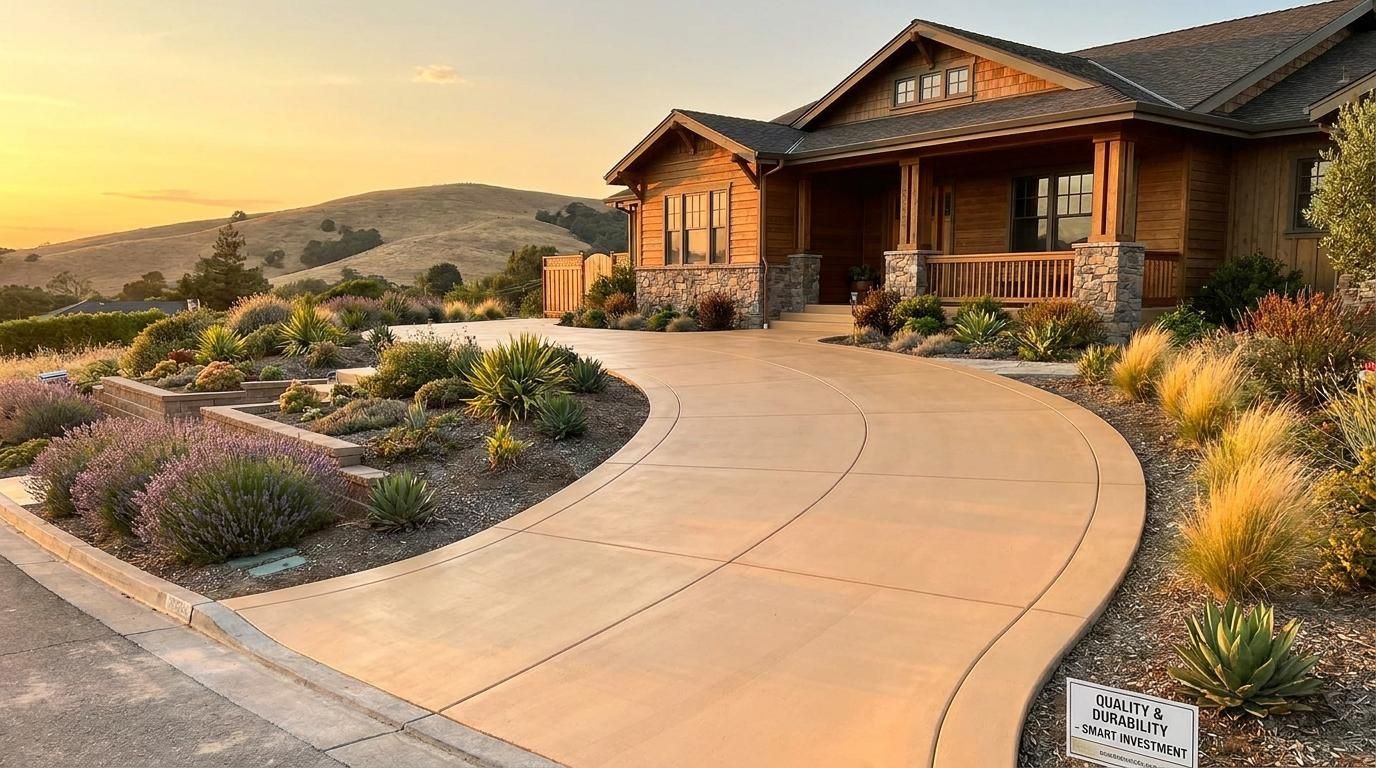
Both materials can deliver a quality driveway that lasts decades. The decision comes down to budget, maintenance tolerance, and whether the ability to replace individual units is worth paying double upfront. In the East Bay's clay soil, both need a properly prepared base and good drainage; skip those and neither material holds up.
Cardona Construction provides free on-site estimates for concrete driveway installations throughout the East Bay. Every estimate includes site-specific soil assessment, drainage planning, and a clear breakdown of materials and timeline. Call (925) 642-6349 or schedule your free estimate online.