
Sump Pump Not Working? Troubleshooting Guide for Homeowners
A sump pump that isn't working is usually caused by a stuck float switch, tripped circuit breaker, clogged discharge line, or burned-out motor. Most of these issues can be diagnosed in minutes. Cardona Construction installs and services sump pump systems across the East Bay, including battery backups for power outages. Pump failure during power loss is the scenario we see most often during atmospheric river storms when homeowners need their pumps the most.
In the East Bay, a sump pump failure during November through April can flood a basement in hours. Alameda and Contra Costa County homes built on clay soil face the highest risk because groundwater levels spike during atmospheric river events. Knowing how to troubleshoot your pump before the next storm is the difference between a dry basement and a water damage claim.
Check These Five Things First
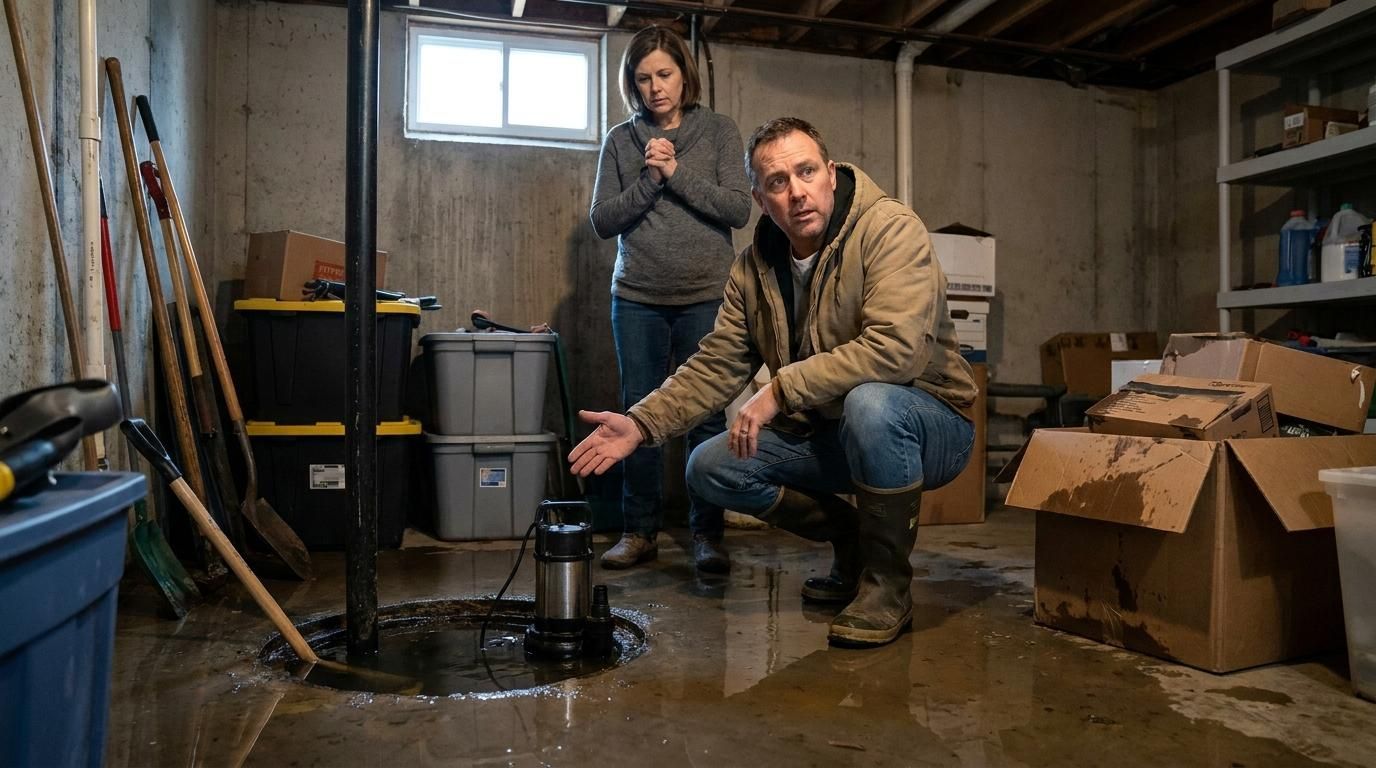
Before calling a contractor, run through these common failure points. Most sump pump problems trace back to one of five causes that homeowners can identify and sometimes fix themselves.
1. Power Supply
Confirm the pump is plugged in and the outlet has power. Sump pumps should be on a dedicated GFCI outlet. If the GFCI has tripped, reset it and test. If it trips again immediately, the pump may have a short circuit that needs professional repair. During Bay Area winter storms, check that the circuit breaker hasn't tripped due to a power surge.
2. Float Switch
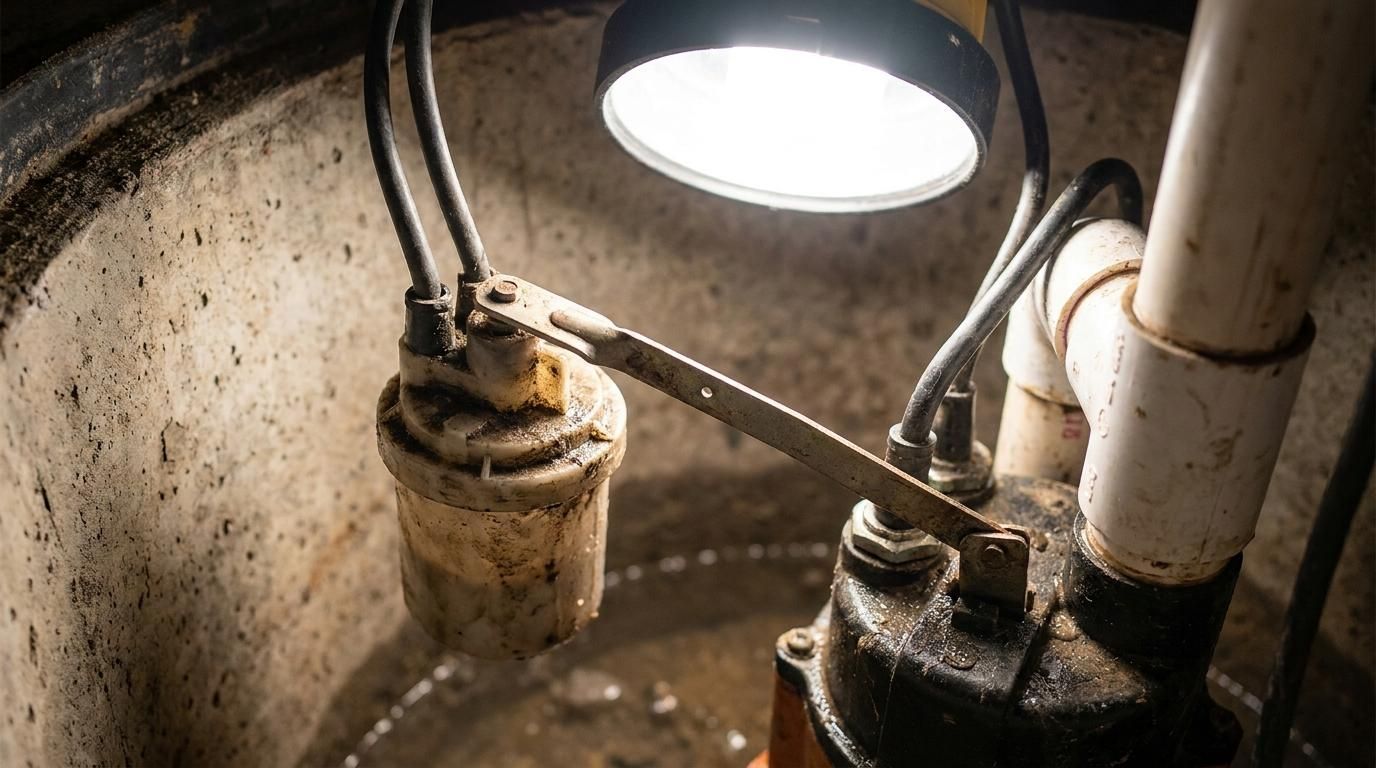
The float switch tells the pump when to activate. If the float is stuck against the pit wall, tangled in the power cord, or wedged under debris, the pump won't turn on even when water rises. Reach into the pit and manually lift the float. If the pump activates, the float mechanism needs repositioning or replacement.
3. Discharge Line
A frozen, kinked, or clogged discharge line prevents the pump from expelling water even though the motor runs. Check the exterior discharge point for obstructions. In the Bay Area, discharge lines rarely freeze, but sediment buildup and leaf debris at the outlet are common causes of blockage. Disconnect the line at the pump and check for flow.
4. Check Valve
The check valve prevents discharged water from flowing back into the pit. A failed check valve causes the pump to cycle continuously as water returns after each pump cycle. Listen for the pump turning on and off every few minutes. Replace the check valve if it's not holding.
5. Motor and Impeller
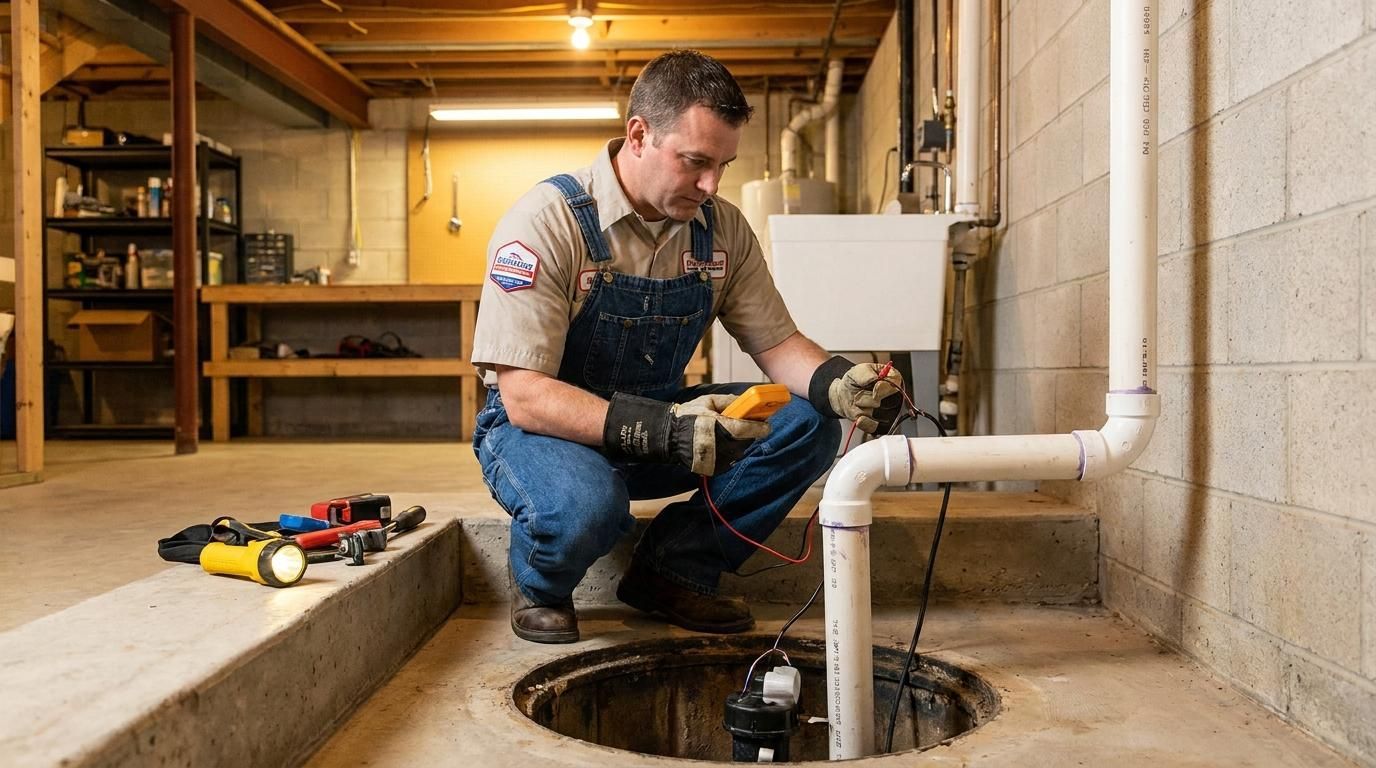
If the pump has power and the float moves freely but the motor doesn't run, the motor has likely burned out. Motors fail after 7 to 10 years of regular use, faster if the pump runs frequently in high-water-table areas. A humming sound without pumping usually means a jammed impeller, which a professional can clear or replace.
When to Repair vs. Replace Your Sump Pump
Not every failure requires a new pump. But investing in repairs on an aging system often costs more than replacement when you factor in the next failure.
Repair Makes Sense When
- The pump is less than five years old and the issue is a float switch, check valve, or discharge line problem
- The motor runs but the impeller is jammed with debris
- The GFCI or electrical connection is the failure point, not the pump itself
Replacement Makes Sense When
- The pump is more than seven years old and the motor has failed
- The pump runs constantly but can't keep up with water volume
- You've repaired the same unit more than twice in two years
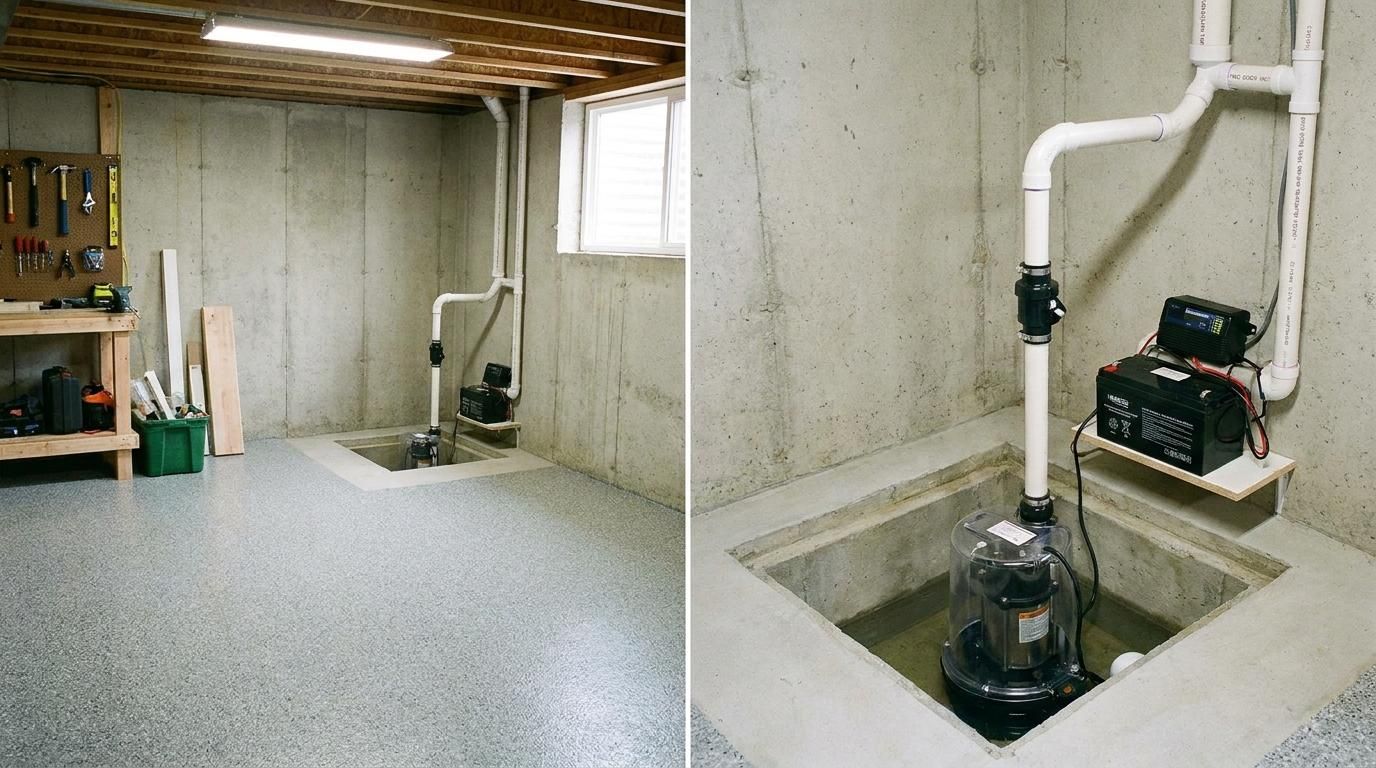
- The system lacks a battery backup and you want full storm protection
Replacement costs $1,100 to $3,000 for the pump, pit, and discharge line. Adding a battery backup system costs $500 to $1,500 more but is essential for Bay Area homes. Cardona Construction's guide on how to install a sump pump covers what a proper installation includes and why it matters for system longevity.
Prevent Future Failures With Regular Maintenance
A sump pump that fails during a storm is almost always a pump that hasn't been tested or maintained. A simple quarterly routine keeps the system reliable when it matters most.
- Test the pump every three months by pouring a bucket of water into the pit until the float triggers
- Clean the pit of debris, gravel, and sediment that can jam the impeller or block the float
- Inspect the discharge line and exterior outlet for blockages before rainy season
- Replace the battery backup every three to five years, or when the low-battery alarm sounds
- Check the GFCI outlet monthly during rainy season to confirm it hasn't tripped
The best time to service your sump pump in the Bay Area is September or October, before the first significant rain. From Walnut Creek and Concord to Oakland and Richmond, the pattern is consistent: pumps that tested fine in April often have a seized impeller or dead battery by November after sitting idle all summer.
Frequently Asked Questions
Why is my sump pump running but not pumping water?
The most common cause is a clogged or frozen discharge line preventing water from leaving the pit. The second most common cause is a failed impeller inside the pump housing. Disconnect the discharge line and run the pump. If water comes out of the pump outlet, the blockage is in the line. If not, the impeller needs repair or the pump needs replacement.
How often should a sump pump run?
During Bay Area rainy season, a pump may run every few minutes in high-water-table areas. During dry months, it should rarely activate. If your pump runs continuously regardless of weather, the check valve may be failed, the pit may be undersized, or groundwater levels are higher than the system was designed to handle.
Do I need a battery backup for my sump pump?
In the Bay Area, yes. Winter storms that cause the most water intrusion also cause the most power outages. A battery backup keeps the pump running for 8 to 12 hours on a full charge, which is typically enough to survive a storm-related outage. Without backup, a power failure during heavy rain means guaranteed flooding.
Get Your Sump Pump Back Online
Most sump pump failures come down to power, float switches, or discharge line blockages. Checking those three things takes less than 10 minutes and solves the majority of problems. For motor failure, undersized systems, or pumps past their service life, professional replacement is the reliable long-term fix.
Contact Cardona Construction at (925) 642-6349 or schedule your sump pump service to get your East Bay home's drainage protection back online before the next storm.